
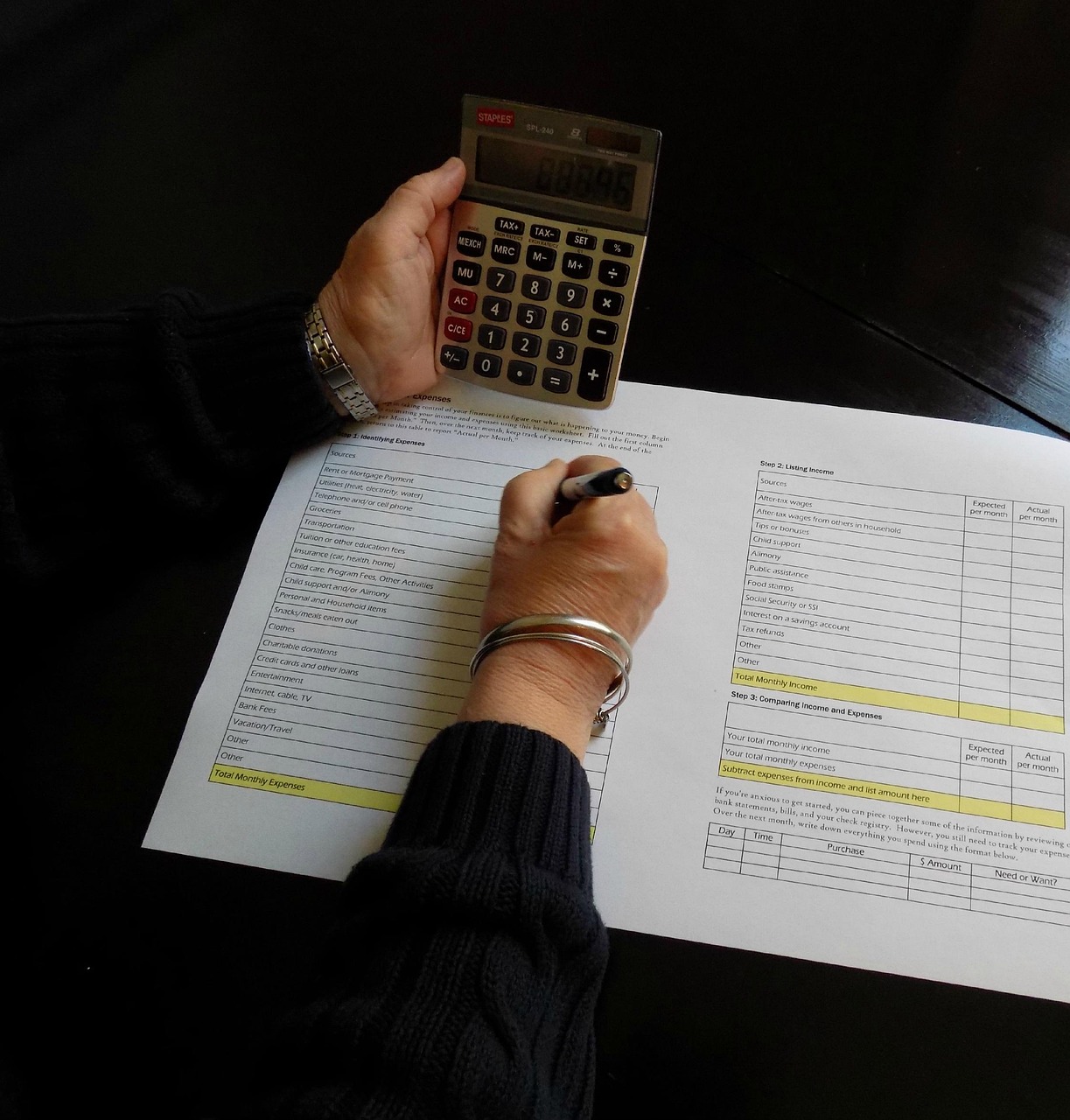



Open almost any offer document from a company that has been busy buying or selling businesses and you will find a section called proforma financial statements in RHP filings. It is easy to skip. Please don’t. These pages try to answer a simple question: what would the company’s numbers have looked like if a recent acquisition or divestment had already been in place for the whole period?
The restated accounts tell you what actually happened. The proforma numbers tell you what the business you are buying into looks like today. When a company has just bolted on a big subsidiary, or sold one off, those two pictures can be very different. Here we walk through what SEBI’s rules require, who signs off on these statements, and how to read them with a few worked examples using made-up numbers.
In this article
- Why proforma financial statements in RHP documents exist
- The 20% materiality test
- What periods are covered and who certifies them
- The 2025 changes
- A related rule: acquisitions funded from IPO money
- Worked example 1: testing materiality
- Worked example 2: two small deals that add up
- Worked example 3: reading a proforma table after a divestment
- How to read proforma numbers without getting misled
- Where to find it in the document
- The short version
Why proforma financial statements in RHP documents exist
An IPO document normally carries restated financial statements for past periods. We covered how those work in our piece on restated financial statements in an IPO. The catch is timing. Restated accounts stop at the latest period disclosed. If the company buys a large business a month after that date, the restated numbers simply don’t include it.
Imagine an investor reading a revenue line of, say, Rs 500 crore, while the company has actually just doubled in size through a purchase. Or the reverse: a company sells a profitable division, and the historical profit it shows includes earnings it no longer owns. Proforma statements close that gap by rebuilding the numbers as if the deal had happened earlier.
The rules sit in Schedule VI, Part A of the SEBI (Issue of Capital and Disclosure Requirements) Regulations, 2018, in the section on financial information, under the heading “Other Financial Information”. That’s the primary source for everything below.
The 20% materiality test
Not every small deal triggers proforma accounts. SEBI asks for them when an acquisition or divestment (including a deemed disposal) is material, and it defines material in a fairly mechanical way.
An acquired or divested business or subsidiary is material if, in aggregate, it contributes 20% or more to any one of these three measures in the issuer’s latest annual consolidated financial statements:
- turnover,
- net worth, or
- profit before tax.
Note the word “or”. Crossing the line on just one measure is enough. A small, highly profitable target can trip the profit test even if its revenue looks minor. And note “in aggregate”: several deals that are each small can together cross 20%.
The requirement covers deals made after the latest period for which financial information is disclosed in the offer document, but before the document is filed. That is exactly the blind spot the restated accounts leave.
Restated accounts show what the company was. Proforma accounts show what it has just become. When a big deal sits between the two, read both.
What periods are covered and who certifies them
Under the current text, the proforma statements must be prepared for at least the last completed financial year and the stub period, if there is one. The issuer can choose to show other periods as well.
They must follow any guidance note, standard on assurance engagement or guideline issued by the Institute of Chartered Accountants of India (ICAI). And they must be certified either by the statutory auditor, or by chartered accountants who hold a valid certificate from the ICAI’s Peer Review Board.
That second option comes with a catch for the company. Schedule VI also says that if proforma or restated consolidated statements are provided by a peer-reviewed chartered accountant who is not the company’s statutory auditor, the issuer has to list this as one of its top 10 risk factors in the offer document. So if you see that risk factor near the top, you know immediately who did the work.
A few other points from the same paragraph are worth knowing:
- If there are one or more acquisitions or divestments, the company should present one combined set of proforma statements, not a separate set per deal.
- Where the business bought or sold isn’t a separate legal entity, there may be no general purpose financial statements for it. In that case, combined or carved-out statements are prepared under ICAI guidance.
- For non-material deals, the company still has to disclose the fact of the acquisition or divestment, the consideration paid or received and the mode of financing, certified by the statutory auditor or a peer-reviewed chartered accountant.
The 2025 changes
The present wording was substituted by the SEBI ICDR (Amendment) Regulations, 2025, with effect from 8 March 2025, according to the footnotes in SEBI’s consolidated text. Comparing the old and new versions, which the footnote reproduces, a few things changed:
- The old text said “the last completed financial year and the stub period”. The new one says “at least” those periods, and lets the issuer disclose proforma statements for periods it chooses.
- The new text lets an issuer voluntarily provide proforma statements for deals completed before the latest period disclosed in the offer document, not only for those below the 20% threshold.
- Preparation now refers to “any guidance note, standard on assurance engagement or guideline” from the ICAI, instead of only a guidance note, and certification can be by the statutory auditor or a peer-reviewed chartered accountant.
- The materiality test now speaks of businesses material to the consolidated statements “individually or collectively”.
For readers, the practical effect is that you may see proforma tables in more offer documents than before, sometimes covering deals that are already partly reflected in the restated numbers. Always check which deals and which periods a given proforma table covers before comparing it with anything.
A related rule: acquisitions funded from IPO money
Don’t confuse proforma statements with a separate rule in the same part of the schedule. If IPO proceeds are going to be used, fully or partly, to buy one or more material businesses, the offer document has to include the target’s audited balance sheet, profit and loss and cash flow statements for the latest three financial years and the stub period, if available. The same 20% test on turnover, net worth or profit before tax decides materiality. Here the issuer may also add proforma statements showing the impact of the deal.
So there are two different situations. One is a deal that has already happened after the last reported period. The other is a deal the company plans to fund with your money. Both lean on the same 20% yardstick, but they lead to different disclosures. The second one ties into the objects of the issue, which is where the company tells you what it will do with the money raised.
Worked example 1: testing materiality
All numbers in these examples are illustrative, not from any real company.
Say an issuer’s latest annual consolidated statements show:
- Turnover: Rs 1,000 crore
- Net worth: Rs 400 crore
- Profit before tax: Rs 80 crore
After the last reported period, it buys Company X, which has turnover of Rs 120 crore, net worth of Rs 50 crore and profit before tax of Rs 18 crore.
Now run the three tests:
- Turnover: 120 / 1,000 = 12%. Below 20%.
- Net worth: 50 / 400 = 12.5%. Below 20%.
- Profit before tax: 18 / 80 = 22.5%. Above 20%.
One test crossed, so the deal is material and proforma statements are required. Most people would glance at a Rs 120 crore target next to a Rs 1,000 crore company and call it small. On profit, it isn’t.
Worked example 2: two small deals that add up
Same issuer. This time it buys two businesses, Y and Z. Y has turnover of Rs 110 crore and Z has Rs 100 crore. Neither alone reaches 20% of Rs 1,000 crore. Together they are Rs 210 crore, or 21%.
Because the rule looks at contribution “in aggregate”, the pair counts as material, and the company would present one combined set of proforma statements covering both. If you only read the deal-by-deal descriptions, it would be easy to miss this.
Worked example 3: reading a proforma table after a divestment
Now take a company whose restated profit and loss for the last financial year shows revenue of Rs 800 crore and profit before tax of Rs 90 crore. After year end, it sells Division D, which contributed revenue of Rs 200 crore and profit before tax of Rs 30 crore.
Division D is 25% of revenue (200 / 800) and about 33% of profit before tax (30 / 90), so it is material on both counts.
A simplified proforma view strips D out. Revenue becomes Rs 600 crore. Profit before tax starts at Rs 60 crore before any adjustments, such as interest saved if sale proceeds are used to repay debt, or costs that were shared with D and now stay with the remaining business. Suppose the proforma statement shows Rs 12 crore of interest saved and Rs 5 crore of shared costs that don’t go away. Adjusted profit before tax would be 60 + 12 – 5 = Rs 67 crore.
Here is why that matters. If you value the company on last year’s restated Rs 90 crore of profit, you are paying for earnings that have been sold. The proforma Rs 67 crore is closer to what the continuing business actually earns, though it still rests on management’s assumptions.
A valuation built on restated profit after a big divestment can quietly include earnings the company no longer owns.
How to read proforma numbers without getting misled
Proforma statements are useful, but they are a “what if” by design. A few habits help.
Read the basis of preparation. The notes will say which deals are included, the assumed date of each transaction and which adjustments were made. If the assumptions look generous, discount the numbers accordingly.
Look at each adjustment line. Common ones include financing costs on acquisition debt, amortisation of acquired intangibles, removal of intercompany transactions and tax effects. Large “other adjustments” with little explanation deserve a second look.
Check who certified them. Statutory auditor or peer-reviewed chartered accountant? If it’s the latter, the top-10 risk factor should be there. If it isn’t, ask why.
Compare with restated figures and key ratios. Earnings per share, return on net worth and EBITDA in the offer document are computed under ICAI guidance. When a big deal has happened, work out roughly how these would change on a proforma basis. Our guide to material developments in an RHP covers the other place where post-balance-sheet events show up.
Remember what proforma isn’t. It is not a forecast. It doesn’t say how the combined business will perform next year. It only re-cuts past numbers as if the deal had already been done.
Where to find it in the document
In most RHPs, the proforma statements sit in the financial information section, near the restated statements and “other financial information”. The summary of financial information at the start of the document, and the management discussion and analysis section, often refer to them too. If the company has done a big deal after the last reported period and you can’t find a proforma section, the materiality test is the first thing to check.
For a broader view of how to approach a new issue, from the price band to the lock-in rules, see our guide to IPO investing in India.
The short version
When a company coming to market has recently bought or sold a business that contributes 20% or more of its turnover, net worth or profit before tax, SEBI’s ICDR Regulations require a combined set of proforma financial statements for at least the last completed financial year and any stub period, certified by the statutory auditor or a peer-reviewed chartered accountant. We think these pages are among the most underrated in an offer document. They tell you what you are really buying.
Read them next to the restated accounts, test the materiality maths yourself and question every adjustment. The worked examples above use made-up numbers only to show the mechanics; actual offer documents will have their own assumptions and notes.
Disclaimer: This article is for educational purposes only and is not investment advice. Please do your own research or consult a SEBI-registered investment adviser before making any investment decision.

Leave a Reply
Join the conversation
Commenting is open to registered readers. Sign up with just your email — no password needed, and it takes under a minute.
Sign up to comment Log in