

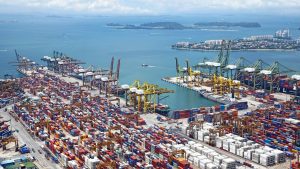

Bajaj Auto’s Q2 results came with a small milestone that says a lot about where the company is headed. In July-September, it shipped 7,78,528 vehicles overseas and 7,70,356 at home, so exports edged past domestic volumes. Standalone net profit rose 35% year-on-year to ₹3,354 crore, from ₹2,480 crore, according to the company’s Q2 FY27 press release, and standalone revenue crossed ₹20,000 crore in a quarter for the first time.
In this article
Bajaj Auto Q2 results: the headline numbers
All figures below are standalone and compare the September 2026 quarter with the same quarter last year, as per the press release:
- Revenue from operations rose 34% to ₹20,003 crore, from ₹14,922 crore. Against the June quarter’s ₹17,244 crore, that is a 16% jump.
- EBITDA grew 37% to ₹4,172 crore, from ₹3,052 crore.
- The EBITDA margin was 20.9%, up from 20.5% a year ago and flat against the June quarter.
- Profit after tax came in at ₹3,354 crore. For the first half (April-September), profit rose 38% to ₹6,337 crore.
The consolidated numbers grew much faster. ETAuto reported consolidated net profit attributable to owners of ₹3,436.10 crore, up 61.9% from ₹2,122.03 crore, and consolidated revenue from operations up 59.7% at ₹25,125.56 crore, from ₹15,734.74 crore. Profit before tax was ₹4,609.77 crore, against ₹2,998.66 crore a year earlier. So when you see “profit up 62%” in one headline and “up 35%” in another, they’re both right. One is consolidated, the other standalone.
Volumes: exports did the heavy lifting
Total sales rose 20% to 15,48,884 units. The split is what stands out. Exports grew 41%, with two-wheeler exports up 43% to 6,76,545 units and commercial vehicle exports up 26% to 1,01,983 units. At home, total volumes grew just 4%. Domestic two-wheelers inched up 2% to 6,07,416 units, while domestic commercial vehicles rose 13% to 1,62,940.
The company said Africa nearly doubled its billing over the base quarter and beat its FY21 quarterly peak, and Latin America posted its best-ever sales again. Price increases, a richer sales mix and a favourable currency also helped revenue.
The EV story is getting bigger
Electric vehicles were the standout at home. Bajaj said its electric portfolio closed in on a record of about 2 lakh units, against 82,000 in the same quarter last year, and now makes up one-third of domestic revenue. Chetak scooter volumes more than doubled, and Chetak revenue crossed ₹2,000 crore. The company admits supply was tight, with demand running ahead of a thin pipeline, and says production is being stepped up.
Speaking to Business Standard, joint managing director Rakesh Sharma said 25% of scooters are now EVs, and that this share could reach about 50% in the next three to five years. Premium bikes did well too. Domestic revenue from KTM and Triumph rose 45%, on volumes above 40,000 units.
Cash and what it means
Free cash flow for the quarter was about ₹4,000 crore, a record, and surplus funds stand at around ₹15,500 crore. That is after returning roughly ₹10,000 crore to shareholders through dividends and a buyback, the company said.
We think the takeaway is this. Bajaj Auto’s growth engine right now is outside India and in electric, not in its core domestic motorcycle business, which barely grew. Margins held at 20.9% despite input cost inflation, which suggests pricing power is intact. Dhruv Joshi of Mirae Asset Sharekhan told Business Standard he expects the company to keep outpacing industry growth, helped by its refreshed portfolio, higher export mix and three-wheelers. The risks are clear enough: logistics disruptions in export markets, EV supply constraints and costs that pricing has only partly recovered.
For a contrast within autos, see our report on Maruti Suzuki’s Q2 results, where record sales came with lower profit. Our guide on how to analyse quarterly results explains why standalone and consolidated numbers can tell such different stories, and the Q2 FY27 earnings roundup covers more of the season.
Disclaimer: This article is for information and education only and is not investment advice. Please do your own research or consult a SEBI-registered adviser before making any investment decision.

Leave a Reply
Join the conversation
Commenting is open to registered readers. Sign up with just your email — no password needed, and it takes under a minute.
Sign up to comment Log in