
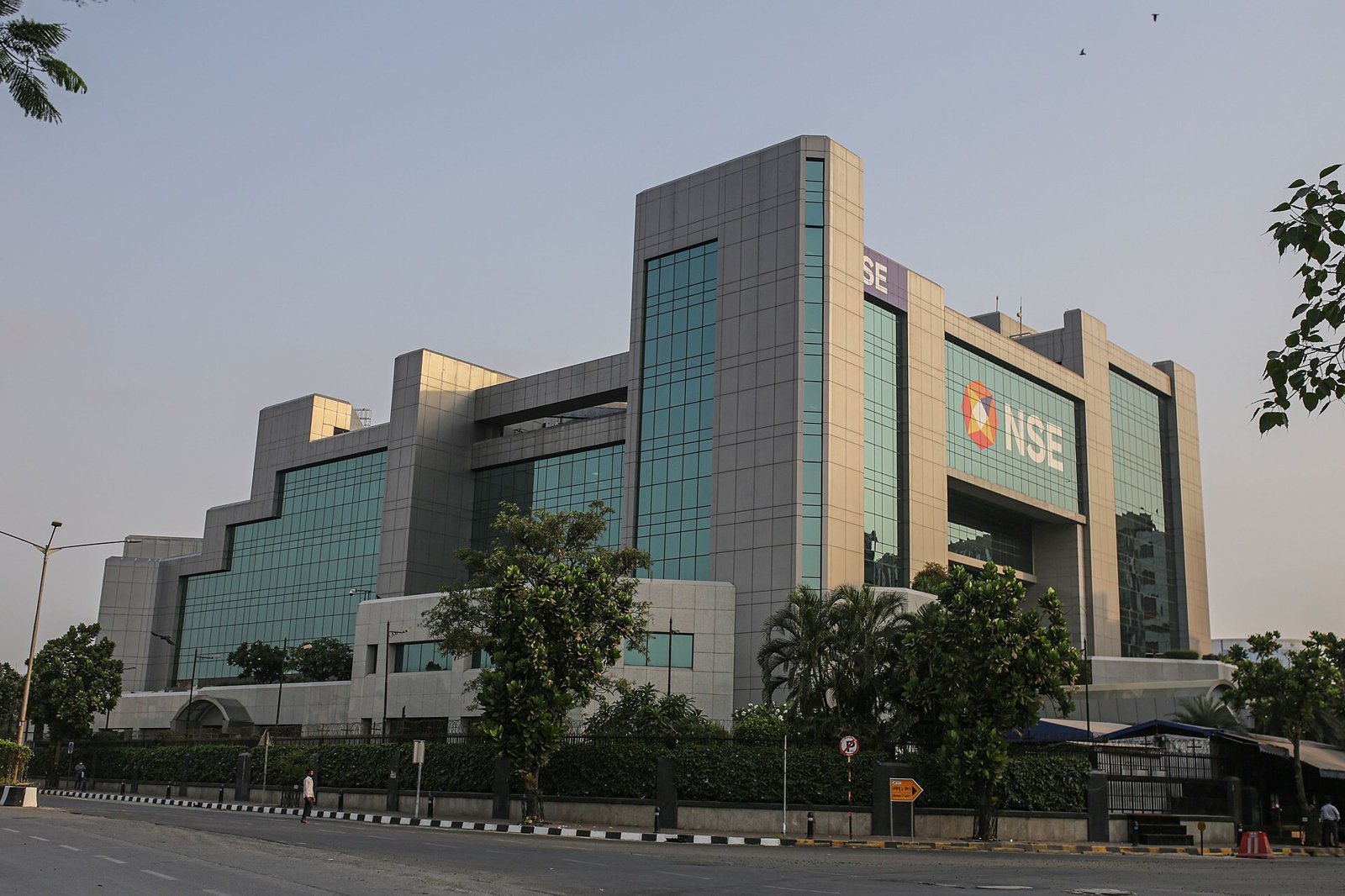



Fractal Analytics listed on February 16, 2026 at a discount to its IPO price. Central Mine Planning & Design Institute listed on March 30 at a bigger discount. Six months later, both were sitting in the Nifty 500. Neither had a full six months of trading history when NSE Indices ran its review, and neither needed one. That is the quiet rule behind newly listed stock index inclusion: a fresh listing is judged on a much shorter window than everyone else, so a big IPO can get into the broad indices within months rather than years.
This piece goes through what the rulebook actually says, how the September 2026 review played out for three recent IPOs, where the one-month shortcut stops working, and the separate Nifty IPO index that takes in new listings almost immediately.
In this article
- Newly listed stock index inclusion: the one-month rule
- Getting past the Nifty 500 entry test
- Three IPOs from 2026 that went through the September review
- Why the Nifty 50 is a much longer road
- The circuit-filter trap for non-F&O listings
- The Nifty IPO index: in within days
- Spin-offs: in the index for three days, then out
- What this means if you buy IPOs
- Sources
Newly listed stock index inclusion: the one-month rule
The broad market indices (Nifty 500 and the indices carved out of it) are reviewed twice a year using data for the six months ending January and July. For most stocks that means six-month averages of market capitalisation and turnover, plus a trading-frequency test of at least 90% of days and an average impact cost of no more than 1% over the same six months.
Then comes the line that changes things for IPOs. The NSE Indices methodology document for equity indices (November 2026 version) says the eligibility criteria for a newly listed security are checked on data for a one-month period instead of a six-month period.
Think about why that’s needed. A company that listed in May has two or three months of prices by the July cut-off. If you forced a six-month average on it, the number would either be meaningless or impossible to compute. The one-month window lets the committee treat it like any other candidate, using the data that exists.
The rest of the Nifty 500 gate still applies. The company must be domiciled in India and traded on NSE, must not be in the BZ series or suspended, and needs an investible weight factor (IWF) of at least 0.10, which is a free float of 10%. There’s an alternative if the float is thinner: the stock’s average free-float market cap must be at least 25% of the average full market cap of the smallest existing Nifty 500 member. It also has to rank within the top 800 on both average daily turnover and average daily full market capitalisation.
Getting past the Nifty 500 entry test
Being eligible is only step one. To actually replace a member, the methodology’s inclusion table for the Nifty 500 asks for two things together:
- the stock’s rank by full market capitalisation must be within the top 350, and
- its full market capitalisation must be at least 1.5 times that of the smallest index constituent.
Existing members are pushed out if their rank by full market cap or average turnover falls below 800, or if they stop meeting the eligibility rules. The table allows up to 25 replacements per review, with footnoted exceptions.
Here’s a worked example with made-up numbers, just to show the mechanics. Say the smallest Nifty 500 member has a full market cap of ₹5,000 crore at the cut-off. A company that listed in late May would need a full market cap of at least ₹7,500 crore (1.5 × ₹5,000 crore), measured over its one-month window, and would also need to rank inside the top 350. A ₹6,000 crore listing clears the first bar for eligibility (if it’s in the top 800) but fails the 1.5-times test, so it waits for the next review.
A fresh listing doesn’t have to wait years to be counted as part of the market. If it’s big enough and trades every day, one month of data is enough to put it on the committee’s table.
Three IPOs from 2026 that went through the September review
The NSE Indices press release of August 10, 2026 listed 27 inclusions and 27 exclusions in the Nifty 500, effective September 30, 2026 (from the close of September 29). Among the names coming in were Bharat Coking Coal, Central Mine Planning & Design Institute (CMPDI) and Fractal Analytics. The same three also appeared in the list of 33 additions to the Nifty Smallcap 250, which is simply the Nifty 500 minus the Nifty 100 and Nifty Midcap 150. Business Standard’s report on the reshuffle carries the same 33-in, 33-out count and effective date.
Their listing stories were very different, which is the useful part.
Bharat Coking Coal: listed January 19
Bharat Coking Coal was the first mainboard IPO of 2026. According to Moneycontrol, it listed on NSE on January 19 at ₹45 against an issue price of ₹23, a premium of 95.65%. The ₹1,071 crore issue had been subscribed about 147 times. Coal India’s own filing to NSE confirms the January 19 listing and says its stake fell from 100% to 90%.
Two things stand out. First, timing. The March 2026 review used data for the six months ending January. Bharat Coking Coal had traded for under two weeks by January 31, short of even the one-month window, so the September round was its first real shot. By then the February–July window covered its full trading history.
Second, float. With the parent holding 90%, the public float at listing was 10%, which is right at the 0.10 IWF floor. Government-company IPOs with small floats are exactly why the alternative 25%-of-smallest-member test exists.
Fractal Analytics: listed February 16
Fractal went the other way on day one. CNBC-TV18 reported it debuted at ₹876 on NSE on February 16, a 2.67% discount to the ₹900 issue price, after its ₹2,834 crore IPO was subscribed 2.66 times. It had missed the first half of February, so it did not have the full six months ending July. It still made the Nifty 500 list.
CMPDI: listed March 30
CMPDI, another Coal India arm, had a weaker start. Moneycontrol reported it listed at ₹160 on NSE on March 30, a 6.98% discount, after a ₹1,842 crore offer that was subscribed just 1.05 times. CNBC-TV18 put the valuation at ₹12,280.8 crore at the top of the price band, so the issue was about 15% of the company (₹1,842 crore ÷ ₹12,280.8 crore). CMPDI had roughly four months of trading before the July cut-off.
Put those three side by side and the listing-day mood looks irrelevant. One nearly doubled, one listed below its issue price, and one barely got subscribed. All three were in the Nifty 500 from September 30. The index committee doesn’t care about listing gains. It cares about size, turnover, float and whether the stock trades every day. Keep that in mind on listing day, when the price discovery noise is loudest.
Why the Nifty 50 is a much longer road
The one-month shortcut gets a new listing into the Nifty 500 family. It does not fast-track it into the Nifty 50. The Nifty 50 picks only from Nifty 100 members that are available for trading in NSE’s Futures & Options segment, and it asks for 100% trading frequency over the last six months, an average impact cost of 0.50% or less for 90% of observations on a ₹10 crore portfolio, and a free-float market cap at least 1.5 times that of the smallest constituent. On top of that, no more than five companies can be added in a calendar year.
So a new listing first needs F&O permission, which is decided separately under exchange and SEBI rules, and then has to beat the 1.5-times free-float bar against a large-cap. For scale, BSE Ltd., the one stock that entered the Nifty 50 in September 2026, did so with an average free-float market cap of ₹1,40,879 crore, against ₹55,930 crore for Wipro, the member it replaced. We go through that case in detail in our piece on Nifty index rebalancing.
The Nifty 100 is somewhere in between. A stock ranked within the top 90 by average full market cap can come in if it is in F&O or if its average daily turnover beats that of the 90th stock in the Nifty 100. That turnover route matters for a big, heavily traded IPO that doesn’t have derivatives yet.
The circuit-filter trap for non-F&O listings
Many recent listings hit price bands often in their first months. The methodology has a rule aimed squarely at that. For the Nifty 100, a non-F&O stock is eligible only if the number of times it hit the upper or lower circuit over the past six months is less than 20% of the total trading days in that period. Hitting both the upper and lower band on the same day counts as two instances.
A hypothetical: assume 120 trading days in the window. The limit is anything under 24 instances (20% of 120). A stock that hit the upper circuit on 15 days, and both bands on another 5 days, racks up 15 + (5 × 2) = 25 instances. It fails, however large its market cap.
The index rules reward a stock that trades boringly every day. A listing that keeps locking in circuits can be big and still not qualify.
The Nifty IPO index: in within days
There’s a separate index built entirely around new listings. The Nifty IPO index tracks the last 100 IPOs listed on NSE. Per the methodology:
- Eligible companies are IPOs on NSE’s main board (and stocks permitted to trade on NSE from their listing day) with a free-float market cap of at least ₹100 crore on the listing date.
- New eligible IPOs are added on a T+4 basis, where T is the listing date. Nobody is removed to make room, so the count can go above 100 between reviews.
- At each quarterly review (effective the last trading day of March, June, September and December), the count is reset to 100 by removing the stocks with the oldest listing dates.
- Weights are based on free-float market cap, with each stock capped at 10%.
- The index started on January 2, 2017 with a base value of 1,000.
Worked example, again hypothetical. A company lists with a full market cap of ₹600 crore and a public float of 15%. Its free-float market cap is ₹90 crore (₹600 crore × 0.15), below the ₹100 crore floor, so it never enters the Nifty IPO index. A ₹1,000 crore company with a 25% float has ₹250 crore of free-float market cap and qualifies. If you want a refresher on how that float-adjusted number is built, see our explainer on free float market capitalisation.
Spin-offs: in the index for three days, then out
Demerged companies are a different case, and people often mix them up with IPOs. When an index constituent spins off a business, the new entity can sit in the index temporarily as a “dummy” and then as the newly listed symbol. Under the methodology, it is normally removed after the close of its third day of listing. If it hits the lower price band in its first days of trading, the exit is deferred until it has gone two consecutive days without hitting the lower band. During that temporary period it is not screened for eligibility at all.
For the regular review, there’s a parallel rule: a company that has gone through a scheme of arrangement is considered eligible only if it has completed one calendar month of trading on an ex basis by the cut-off date.
What this means if you buy IPOs
- Index entry is not a listing-day story. In September 2026, a 95% listing pop, a sub-par debut and a barely subscribed issue all ended in the same place. Size, float and liquidity decided it.
- Check the calendar. Data windows end in January and July. A stock that lists in the last two weeks of either month will usually miss that review and wait six more months.
- Look at the float. A 10% float is right at the floor. Anything thinner relies on the alternative market-cap test.
- Circuits can disqualify. For non-F&O stocks eyeing the Nifty 100, frequent circuit hits are a real barrier.
- Passive buying is not a reason to own a stock. Inclusion says a company is big and liquid. It says nothing about price. Our guide to IPO investing in India covers the basics we’d check first.
Sources
- NSE Indices: Methodology Document for Equity Indices (November 2026)
- NSE Indices press release, “Replacements in indices”, August 10, 2026
- Business Standard: Nifty 50 to see BSE replace Wipro in September index reshuffle
- Coal India disclosure to NSE on the Bharat Coking Coal listing, January 19, 2026
- Moneycontrol: Bharat Coking Coal listing
- CNBC-TV18: Fractal Analytics listing
- Moneycontrol: Central Mine Planning listing
- CNBC-TV18: CMPDI listing and valuation
Disclaimer: This article is for education only and is not investment advice. Index inclusions, exclusions and IPO listings mentioned here are not recommendations to buy or sell any security. Please do your own research or consult a SEBI-registered adviser before investing.

Leave a Reply
Join the conversation
Commenting is open to registered readers. Sign up with just your email — no password needed, and it takes under a minute.
Sign up to comment Log in