
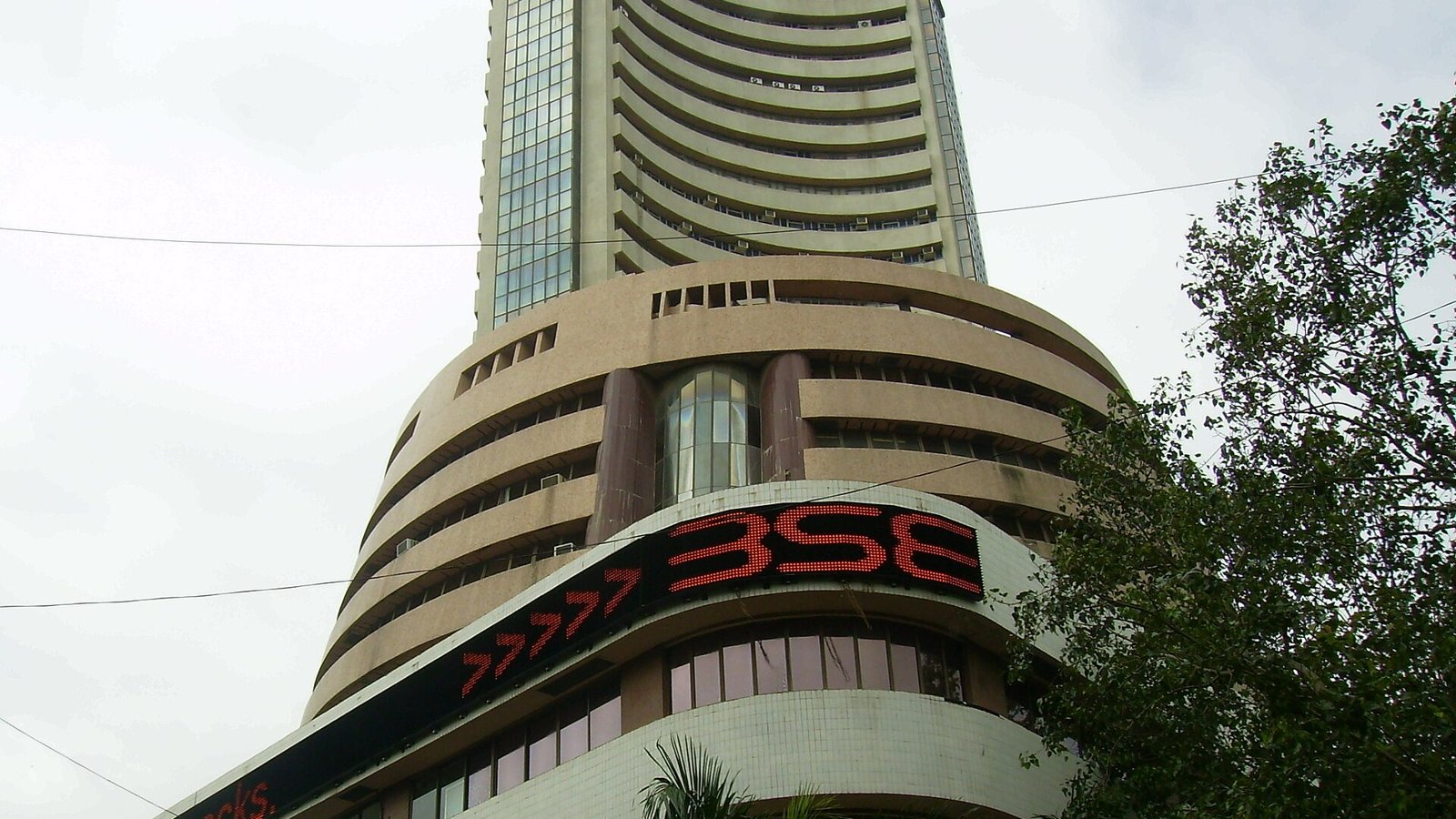



Twice a year, a short PDF from NSE Indices decides which companies thousands of crores of passive money must buy and which ones it must dump. That process is Nifty index rebalancing, and most retail investors only hear about it when a headline says “X enters Nifty 50”. The rules behind it are public, fairly mechanical and, once you’ve read them, a lot less mysterious. This piece walks through how the review works, the 1.5-times test that keeps the index from churning, and the September 2026 change in which BSE Ltd. replaced Wipro, with the actual numbers.
In this article
- What Nifty index rebalancing actually means
- The calendar: January and July data, March and September changes
- Who is even allowed in
- Free float: the number that decides your weight
- The 1.5-times rule: why one stock got in and two didn’t
- A cap on how many changes a year
- How one change ripples down the family
- Why index changes move prices
- Why the index level doesn’t jump on the swap day
- Smaller changes between reviews
- How to use this as an investor
- Sources
What Nifty index rebalancing actually means
“Rebalancing” gets used loosely for two different things, so let’s separate them.
- Reconstitution is the change of members: some stocks leave, others come in. For the Nifty 50 and the other broad market indices, this happens through a semi-annual review.
- Re-weighting is the adjustment of how much each existing member counts, through changes in share count, free float or capping factors. A lot of this happens quarterly, on the last trading day of March, June, September and December.
Both are spelt out in the NSE Indices methodology document for equity indices (the November 2026 version is the one we refer to here). When people talk about a Nifty reshuffle, they usually mean the first: the March and September review.
The calendar: January and July data, March and September changes
The review of the Nifty 50 uses data for the six months ending January and July. Any replacement is implemented from the last trading day of March and September, and the methodology promises market participants four weeks’ prior notice of any change.
So the cycle runs like this. Data for February to July gets crunched, the committee announces the changes some time in August, and the new basket takes effect at the end of September. The September 2026 round followed that script exactly: the NSE Indices press release dated August 10, 2026 said the changes would be effective from September 30, 2026, which means from the close of September 29.
That gap between announcement and effective date matters. For about seven weeks everyone knows what index funds will have to buy and sell, and on which day. More on that further down.
There’s also an off-cycle route. The methodology allows an additional reconstitution if a constituent goes through a merger, demerger or delisting, is moved to the BZ series, loses its F&O trading permission, gets suspended, or faces adverse regulatory orders that warrant removal.
Who is even allowed in
The Nifty 50 doesn’t pick from the whole market. It picks from the Nifty 100, and only from those Nifty 100 members that are available for trading in NSE’s Futures & Options segment. On top of that, the methodology lists three filters:
- Trading frequency of 100% over the last six months. A stock that missed even a few sessions is out.
- Liquidity: an average impact cost of 0.50% or less for 90% of the observations over the last six months, for a portfolio of ₹10 crore. Impact cost here is the percentage mark-up you suffer while buying or selling that quantity compared with the ideal price, which the methodology defines as (best buy + best sell) / 2.
- Free-float size: to get in, a stock’s average free-float market capitalisation must be at least 1.5 times that of the smallest current constituent.
The Nifty 100 itself sits on top of the Nifty 500, which has its own entry gate. A company must have an investible weight factor (IWF) of at least 0.10, meaning 10% free float, or meet an alternative size test. It must have traded on at least 90% of days in the previous six months, carry an average impact cost no higher than 1%, and rank within the top 800 by both average daily turnover and average daily full market capitalisation. Stocks in the BZ series and suspended stocks are not eligible for any Nifty index.
Free float: the number that decides your weight
The Nifty 50 is free-float weighted. Your weight depends not on the company’s total market value but on the part of it that can realistically trade. If free-float market capitalisation is new to you, the short version is: total shares × IWF × price.
The IWF is built from the shareholding pattern each company files with the exchanges every quarter. NSE Indices strips out, among others, promoter holdings, depository receipts held by promoters, cross-holdings, employee welfare trusts, directors and key managerial personnel, strategic corporate stakes, FDI, private equity and sovereign wealth funds, and shares under lock-in.
Worked example (from the methodology document). Take XYZ Ltd. with 1,00,00,000 shares. Its excluded holdings are:
| Category | Shares |
|---|---|
| Promoter and promoter group | 19,75,000 |
| Foreign Direct Investment | 50,000 |
| Promoter ADR/GDRs | 2,50,000 |
| Associate/group cross-holdings | 12,575 |
| Employee Welfare Trusts | 1,45,987 |
| Shares under lock-in | 14,78,500 |
| Total excluded | 39,12,062 |
IWF = (1,00,00,000 − 39,12,062) / 1,00,00,000 = 0.608794. NSE Indices rounds the IWF to six decimals. Only about 61% of XYZ’s market value counts in any free-float index.
Our own illustration. A hypothetical company has 50 crore shares at ₹1,200, so its full market cap is ₹60,000 crore. With an IWF of 0.45 it counts as only ₹27,000 crore in the index. A company with a promoter sitting on 75% will always look smaller to the Nifty than its headline valuation suggests.
The index doesn’t care how big a company is. It cares how much of that company you could actually buy.
The 1.5-times rule: why one stock got in and two didn’t
This is the part we like most, because it shows why the Nifty doesn’t flip-flop. A challenger can’t simply be a little bigger than the weakest member. It has to be at least 1.5 times bigger, measured on six-month average free-float market cap. The buffer stops a stock bouncing in and out every six months on small price moves.
The August 2026 press release gave the numbers behind its one Nifty 50 change, so we can run the test ourselves.
| Company | Role | 6-month avg free-float mcap (₹ crore) |
|---|---|---|
| BSE Ltd. | Challenger (included) | 1,40,879 |
| Wipro Ltd. | Smallest constituent (excluded) | 55,930 |
| TVS Motor Company | Next eligible challenger | 84,566 |
| Divi’s Laboratories | Next eligible challenger | 82,930 |
| HDFC Life Insurance | Smallest constituent after Wipro’s exit | 65,666 |
| Tata Consumer Products | Second smallest after Wipro’s exit | 73,054 |
Step 1: BSE versus Wipro. The bar is 1.5 × 55,930 = ₹83,895 crore. BSE’s ₹1,40,879 crore is about 2.52 times Wipro’s figure. It clears the test with room to spare.
Step 2: TVS Motor versus HDFC Life. With Wipro gone, the smallest member is HDFC Life at ₹65,666 crore. The bar becomes 1.5 × 65,666 = ₹98,499 crore. TVS Motor at ₹84,566 crore is only about 1.29 times HDFC Life. It falls short by ₹13,933 crore, so its six-month average would have had to be roughly 16.5% higher.
Step 3: Divi’s versus HDFC Life. ₹82,930 crore works out to about 1.26 times. Also short.
Against Tata Consumer, the second-smallest at ₹73,054 crore, the bar is ₹1,09,581 crore, even further away. The press release said exactly this: the next two eligible companies were not considered because the two lowest constituents’ free-float caps were not small enough for the 1.5-times test to be met.
The flip side is worth thinking about. TVS Motor would have qualified only if HDFC Life’s average had been at or below about ₹56,377 crore (84,566 ÷ 1.5). Inclusion depends on how weak the bottom of the index is, not only on how strong the challenger is.
A cap on how many changes a year
There’s a second brake. As part of the semi-annual reconstitution, at most 10% of the Nifty 50’s members, which is five companies, can be added in a calendar year. If the committee feels the March review would eat up too much of that allowance, it can trim the changes, adding the largest eligible company and removing the smallest one first. Exclusions forced by eligibility failures, such as losing F&O availability, higher impact cost, a move to the BZ series, a merger or a delisting, don’t count against this limit.
The wider indices have their own buffers. For the Nifty 100, a stock generally needs to rank in the top 90 by average full market cap to enter, and gets dropped if it falls below 110. Up to five replacements are allowed per review. For the Nifty 500, a stock enters if it ranks in the top 350 by full market cap and is at least 1.5 times the smallest member’s full market cap, while exit kicks in below rank 800, with up to 25 replacements per review. That cap doesn’t apply to exclusions for failing minimum eligibility criteria, dropping out of a parent index, or corporate events such as mergers, demergers, delistings and trading suspensions. That’s why the September 2026 Nifty 500 list ran to 27 exclusions and 27 inclusions without breaking any rule.
How one change ripples down the family
The indices are nested, so one move at the top sets off a chain. In the September 2026 round:
- Nifty 100: BSE, Hitachi Energy India, Polycab India, Vedanta Aluminium Metal and Vodafone Idea came in. Indian Hotels, Lodha Developers, REC, Shree Cement and United Spirits went out. That’s five each way, the maximum allowed per review.
- Nifty Next 50: since it’s simply the Nifty 100 minus the Nifty 50, Wipro dropped into it along with Hitachi Energy, Polycab, Vedanta Aluminium Metal and Vodafone Idea. The same five that left the Nifty 100 left this index too.
- Nifty Midcap 150: 13 exclusions and 13 inclusions. BSE and Hitachi Energy left it because they had moved up.
- Nifty Smallcap 250: 33 out and 33 in.
So a stock like Wipro doesn’t vanish from passive portfolios. It leaves Nifty 50 funds and lands in Nifty Next 50 funds. Different buyers, different weight, same company.
Why index changes move prices
Index funds and ETFs have to hold what the index holds, roughly in the same proportions, or their tracking error grows. The pool is large. NSE Indices’ Nifty 50 whitepaper (2025) counted 40 passive funds (18 ETFs and 22 index funds) tracking the Nifty 50 in India as of June 30, 2025, with combined AUM of ₹4.56 trillion: ₹3.71 trillion in ETFs and ₹847 billion in index funds.
Here’s a rough way to think about what that means for a single stock. At that AUM, every 1% of index weight works out to about ₹4,560 crore of passive holdings in India alone. And that’s only the domestic passive money counted in that whitepaper.
Hypothetical example. Say a ₹10,000 crore Nifty 50 index fund has to buy a new entrant that will carry a 0.8% weight. That’s ₹80 crore to buy. If the stock’s average daily traded value is ₹250 crore, one fund alone needs about 32% of a normal day’s turnover. Add every other tracker doing the same thing at the same close, and you can see why that last session before the effective date gets crowded in the affected names.
The rebalancing trade is one of the few in markets where the buyer’s size, timing and target are all public weeks in advance.
That openness cuts both ways. Anyone can buy the entrant early and hope to sell it to the index funds at the close, so by the effective date a good part of the expected move may already be in the price. We’d treat “stock X is joining the Nifty” as information that’s widely known by the time you read it, not as a tip.
Why the index level doesn’t jump on the swap day
A fair question: BSE’s free-float cap was far bigger than Wipro’s, so didn’t the Nifty jump when one replaced the other? It didn’t, by design. The index value is the index market cap divided by the base free-float market cap, multiplied by the base value. The methodology says constituent changes and corporate actions are handled “without affecting the index value.” The base gets adjusted so the level carries on smoothly.
Illustration with round numbers (not actual Nifty data). Suppose the index is at 25,000 and its free-float market cap is ₹1,00,00,000 crore. The divisor is 1,00,00,000 ÷ 25,000 = 400. Swap out a ₹56,000 crore stock for a ₹1,41,000 crore one and the index market cap becomes ₹1,00,85,000 crore. Keep the old divisor and the index would print 25,212.5, a fake 212.5-point “rally.” So the divisor is reset to 1,00,85,000 ÷ 25,000 = 403.4, and the index stays at 25,000. From the next tick, only price moves change the level.
Smaller changes between reviews
Not everything waits for March and September. If a constituent issues shares through an ESOP, QIP, private placement, warrant conversion or buyback, and the change hits 5% or more of its issued share capital, the update is normally made monthly, effective on the last trading day of the month, with three trading days’ notice. Changes below 5% in share capital or free float are accumulated and applied in the quarterly rebalance at the end of March, June, September and December. Splits, bonuses and dividends are applied on the ex-date.
For the Nifty Next 50 there’s one more quarterly item. Non-F&O stocks are capped at 10% combined and 4.5% individually on quarterly rebalance dates.
How to use this as an investor
- Read the press release, not just the headline. The notes show the free-float numbers and who narrowly missed out. In August 2026, those notes told you TVS Motor and Divi’s were the next names in line.
- Watch the bottom of the index too. A challenger’s odds depend on the weakest members. Run the 1.5-times maths on the smallest two or three constituents.
- Don’t confuse inclusion with quality. Getting into the Nifty 50 reflects size and liquidity over six months. It says nothing about whether the stock is cheap.
- If you own an index fund, relax. The fund handles the swap. Your job is to check its tracking error and expense ratio, not to time the reshuffle.
Sources
- NSE Indices: Methodology Document for Equity Indices (November 2026)
- NSE Indices press release, “Replacements in indices”, August 10, 2026
- NSE Indices: Nifty 50 Whitepaper 2025
Disclaimer: This article is for education only and is not investment advice. Index inclusions and exclusions are not recommendations to buy or sell any stock. Please do your own research or consult a SEBI-registered adviser before investing.

Leave a Reply
Join the conversation
Commenting is open to registered readers. Sign up with just your email — no password needed, and it takes under a minute.
Sign up to comment Log in