
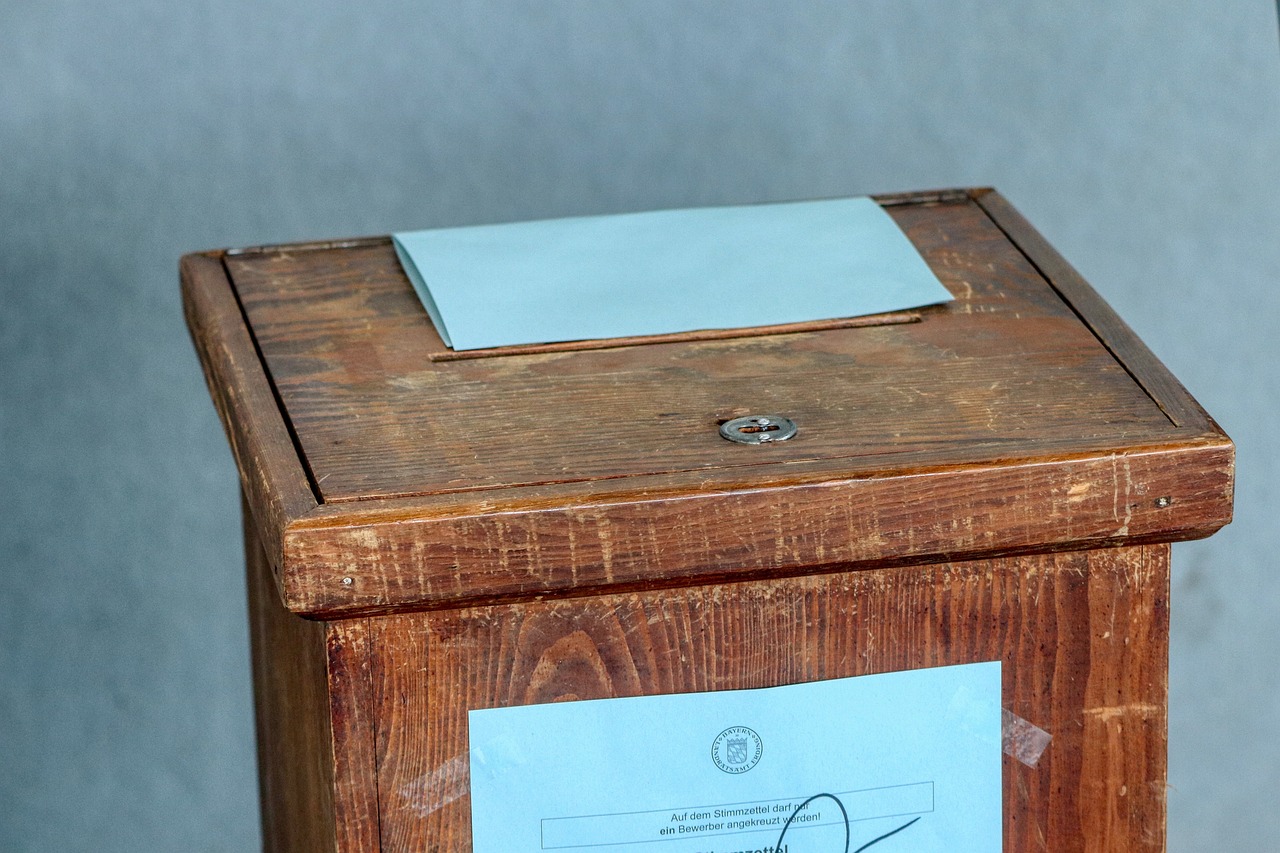



A postal ballot notice is one of those filings that lands in your inbox, gets a glance at the subject line and goes straight to the archive. That’s a mistake. When a listed company sends one, it is asking you, as an owner, to approve something without calling a meeting. Sometimes it’s routine. Sometimes it’s a fund raise that will dilute your stake, or a change to what the company is allowed to do with money it already raised from the public.
We’ll go through what the law actually requires in a postal ballot, how the e-voting-only version that most listed companies now use came about, how to read the notice itself, and how the vote count works, with a worked example of a special resolution that gets close to 75% support and still fails.
In this article
- What a postal ballot notice actually is
- What the rules require from the company
- Which decisions have to go to a postal ballot
- How it works in practice: e-voting only
- A real notice, read section by section
- How the votes are counted, with a worked example
- Where else postal ballots show up in disclosures
- A shareholder’s checklist for any postal ballot notice
What a postal ballot notice actually is
The procedure sits in Section 110 of the Companies Act, 2013 and Rule 22 of the Companies (Management and Administration) Rules, 2014. Rule 22(1) is the starting point. When a company has to, or decides to, pass a resolution by postal ballot, it must send a notice to all shareholders with the draft resolution and the reasons for it, and ask them to send their assent or dissent within 30 days from the date the notice is dispatched. The rule also defines postal ballot to include voting by electronic means, not only paper sent by post.
Section 110(2) then says that a resolution assented to by the requisite majority through postal ballot is deemed to have been duly passed at a general meeting. That’s the key idea. A postal ballot isn’t a lesser kind of approval. It carries the same weight as a vote in the room.
For a shareholder, the practical difference is simple. There’s no meeting to attend, no chairman to question and no Q&A. You get a document, you read it, and you vote within a window. Everything you need to decide has to be in that document.
What the rules require from the company
Rule 22 lays down a fairly tight process. Here’s what the company has to do, in plain terms:
- Send the notice by registered post or speed post, by email to the registered email ID, or by courier (Rule 22(2)).
- Advertise it at least once in a vernacular newspaper in the main language of the district where the registered office sits, and at least once in an English newspaper circulating in that district. The ad must state the dates of dispatch, start of voting and end of voting, say that late votes won’t count, and give a contact for grievances (Rule 22(3)).
- Put the notice on its website as soon as it’s sent, and keep it there until the last date for voting (Rule 22(4)).
- Appoint one scrutinizer who isn’t an employee of the company and who, in the board’s view, can run the process fairly (Rule 22(5)).
- Get the scrutinizer’s report within seven days of the last date of voting (Rule 22(9)).
- Declare the result by placing it on the company’s website along with the scrutinizer’s report (Rule 22(13)).
Any assent or dissent that arrives after 30 days from the notice is treated as if no reply was received (Rule 22(12)). So the window is real. Miss it and your vote simply doesn’t exist.
A postal ballot isn’t a lesser kind of approval. Once the required majority says yes, it counts exactly as if the resolution had been passed at a general meeting.
Which decisions have to go to a postal ballot
Rule 22(16) lists ten items that must be transacted only through a postal ballot. The list is worth knowing, because several of them are big events for a shareholder:
- Changing the objects clause of the memorandum.
- Changing the articles to add or remove the provisions that make a company a private company.
- Shifting the registered office outside the local limits of its city, town or village.
- Changing the objects for which money was raised from the public through a prospectus, when part of that money is still unused.
- Issuing shares with differential rights on voting or dividend.
- Varying the rights attached to a class of shares or debentures.
- A buy-back of shares under Section 68(1).
- Electing a director under Section 151 (the small shareholders’ director).
- Selling the whole or substantially the whole of an undertaking under Section 180(1)(a).
- Giving loans, guarantees or security beyond the limits in Section 186(3).
Now the catch. A 2018 amendment added a proviso: a company that is required to offer electronic voting under Section 108 may take any of these items at a general meeting instead. Companies with up to 200 members, and One Person Companies, don’t have to use postal ballot at all. Listed companies have to give e-voting, so for them the list is really “these can go either way”.
That’s why you’ll see the same type of resolution approved at an AGM by one company and through a postal ballot by another. The choice is often about timing. If the next AGM is months away and the company wants to raise money now, a postal ballot gets it done without waiting.
How it works in practice: e-voting only
If you hold shares in a listed company, you’ve probably never seen a paper postal ballot form. There’s a reason. Regulation 44(1) of SEBI’s LODR Regulations requires a listed entity to provide remote e-voting on all shareholder resolutions, and Regulation 44(2) says that facility has to follow the conditions in the Companies (Management and Administration) Rules.
On top of that, the Ministry of Corporate Affairs has run a framework since General Circular 14/2020 that lets companies conduct postal ballots through e-voting with notices sent by email. Its General Circular 03/2025 dated September 22, 2025 allows companies to keep transacting items through postal ballot under that framework “till further orders”. Rule 22(15) separately applies the e-voting rules in Rule 20 to postal ballots.
So today, for most listed companies, a postal ballot means an email, a PDF and a vote on the e-voting platform of NSDL, CDSL or the registrar. No forms, no prepaid envelopes.
A real notice, read section by section
Let’s look at an actual one. PC Jeweller’s postal ballot notice dated July 16, 2026 follows the standard pattern, and it’s a good template for what to look for.
1. The legal basis paragraph
The notice opens by citing Section 110 of the Companies Act, Rules 20 and 22, MCA General Circular 03/2025, and Regulation 44 of LODR. It also says the approval is sought “by Postal Ballot through e-voting only”. That phrase tells you there is no paper option.
2. Cut-off date and voting window
The cut-off date was Friday, July 10, 2026. Only members on the register on that date can vote, and voting rights are in proportion to their share of the paid-up equity capital as on that date. The notice says plainly that anyone who isn’t a member on the cut-off date should treat it as information only. E-voting ran from 9:00 AM on Saturday, July 25, 2026 to 5:00 PM on Sunday, August 23, 2026, through KFin Technologies.
This is where people trip up. If you bought the shares after the cut-off date, you don’t get a vote on this one, even though the result affects you. If you sold after the cut-off date, you still have a vote. Odd, but that’s how it works.
3. The items, and the type of resolution
Each item says whether it will be passed as an ordinary or a special resolution. In PC Jeweller’s notice, the first item was an increase in authorised share capital with a matching change to the capital clause of the memorandum, proposed as an ordinary resolution. The second was an enabling resolution to raise funds, citing Sections 23, 42, 62(1)(c) and 71 and SEBI’s ICDR Regulations, proposed as a special resolution. The third dealt with the terms of a managing director under Sections 196, 197, 198 and 203.
For an investor, the fund-raising enabler is the one to read slowly. It sets the outer limits within which the board can later issue securities, and that’s where dilution comes from.
4. The explanatory statement
Every postal ballot notice carries an explanatory statement with the material facts behind each item. This is the bit people skip, and it’s the bit that matters. It is where the company explains why it wants the approval, how much it may raise, and who is interested in the resolution.
5. Scrutinizer and results
The board appointed a practising company secretary as scrutinizer. The notice says the result will be declared within 2 working days of the end of e-voting, placed on the company’s website and KFintech’s website, and sent to BSE and NSE. It also says the resolutions, if passed, will be deemed passed on the last date of e-voting, August 23, 2026. For listed companies, Regulation 44(3) separately requires voting results to reach the stock exchange within two working days of the conclusion of a general meeting.
How the votes are counted, with a worked example
The majorities come from Section 114 of the Companies Act. An ordinary resolution passes when votes in favour exceed votes against. A special resolution needs votes in favour that are not less than three times the votes cast against. Both are counted on votes actually cast by members entitled to vote, and Section 114 expressly includes votes by postal ballot and electronic votes.
Three times the votes against works out to 75% of the votes cast for and against. That sounds obvious until you see how close a vote can come and still fail. Here’s a hypothetical example with made-up numbers.
Say a company proposes a special resolution to raise funds through a qualified institutions placement. The votes cast are:
| Votes (hypothetical) | Number of shares |
|---|---|
| In favour | 9.0 crore |
| Against | 3.2 crore |
| Total for and against | 12.2 crore |
Three times the votes against is 3.2 × 3 = 9.6 crore. Votes in favour are 9.0 crore, which is short by 0.6 crore. The resolution fails, even though 9.0 ÷ 12.2 = about 73.8% of the votes cast were in favour.
Now change one thing. Suppose a fund holding 0.7 crore shares had voted against, but switches to abstaining. Votes against fall to 2.5 crore, the bar drops to 7.5 crore, and 9.0 crore clears it easily. Same company, same supporters, different result. One large holder’s choice to stay out of the count changed the outcome.
A special resolution can win nearly three out of four votes cast and still fail. The bar is three times the votes against, not a simple majority.
So when a special resolution fails, look at who voted against before reading it as a broad rejection. A handful of institutions can sink it. And when a promoter holds a big stake, the vote can look like a formality, but the test is still plain arithmetic on the votes actually cast.
Where else postal ballots show up in disclosures
The postal ballot doesn’t vanish after the result. Schedule V of the LODR Regulations requires the corporate governance report in the annual report to say whether any special resolution was passed through postal ballot in the last year with the voting pattern, who conducted the exercise, whether any special resolution is proposed through postal ballot, and the procedure followed. If you missed a vote, the annual report is a good place to catch up on what was approved without a meeting.
There’s also an advance warning. Under LODR’s event disclosure rules, when a board decides on fund raising, the company has to inform the exchange of any AGM, EGM or postal ballot proposed to get shareholder approval for it, along with the type of issuance. So the postal ballot often follows a board-meeting outcome you can read on the exchange website a few weeks earlier.
A shareholder’s checklist for any postal ballot notice
- Check the cut-off date. Were you a member on that date?
- Note the start and end of e-voting. Late votes don’t count.
- Mark each item as ordinary or special. Special ones need three times the votes against.
- Read the explanatory statement, especially for fund raising, changes in objects, buy-backs and related appointments.
- Look for any interested directors or promoters named in the statement.
- After voting closes, read the scrutinizer’s report on the company or exchange website, not just the headline result.
If you track results season closely, our guide on how to analyse quarterly results of a company pairs well with this, since fund-raising ballots often follow a weak or capex-heavy quarter. For two common reasons companies seek approval, see our explainers on preferential allotment of shares and schemes of arrangement.
Most postal ballots pass. That’s not the point. The point is that the notice tells you, in the company’s own words, what management wants to do next and how much room it wants to do it. That’s worth ten minutes of your time.
Disclaimer: This article is for information and education only and is not investment advice. The voting figures in the worked example are hypothetical and used only to show how the majority rules work. Legal provisions are summarised from the sources linked in the article and may change; check the latest text before relying on it. Please do your own research or consult a SEBI-registered investment adviser before making investment decisions.

Leave a Reply
Join the conversation
Commenting is open to registered readers. Sign up with just your email — no password needed, and it takes under a minute.
Sign up to comment Log in