
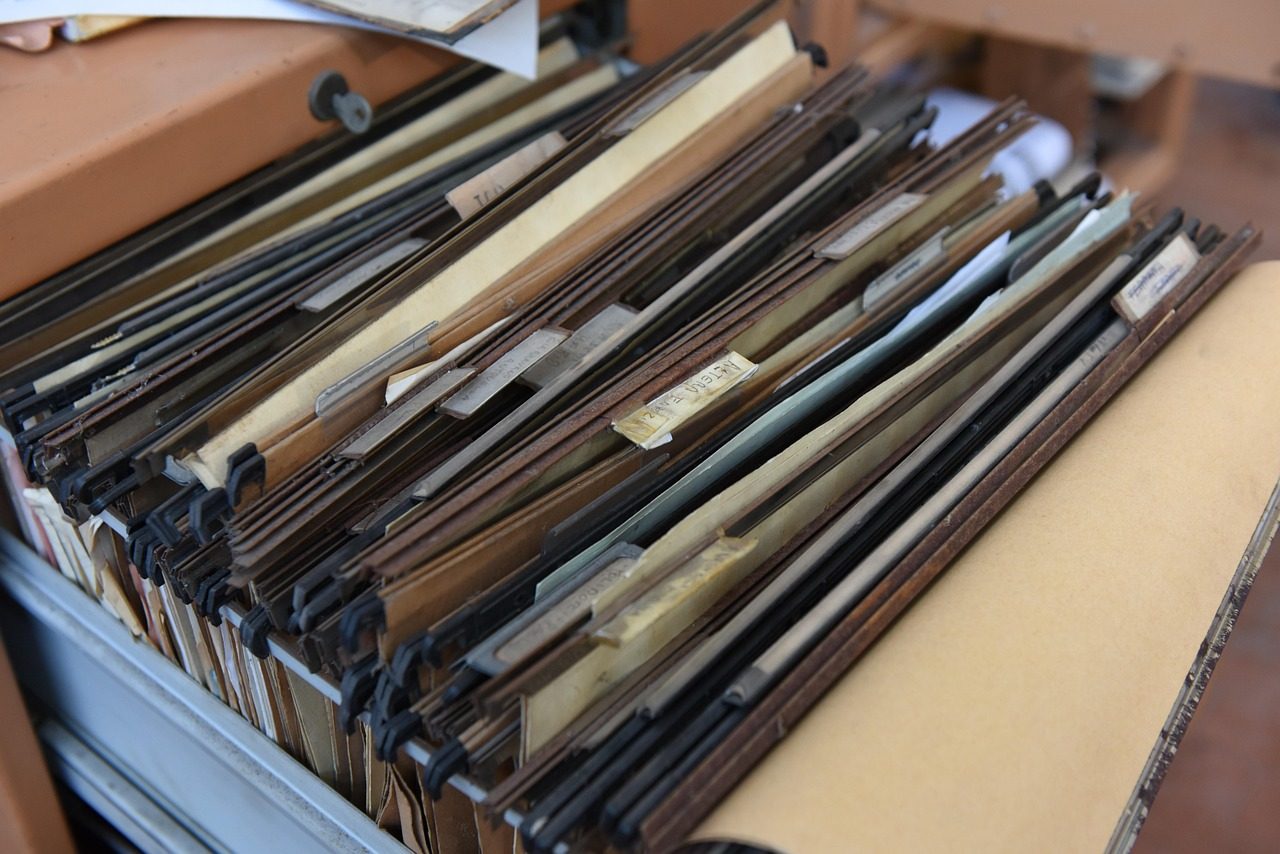



Somewhere in a steel almirah in a lot of Indian homes there is a brown envelope of share certificates. A grandfather bought them in the eighties, or a parent picked them up in a public issue and forgot. If you want to convert physical shares to demat, the good news is that the route is well defined. The bad news is that most delays come from small things: a name spelt differently, holders listed in the wrong order, a certificate defaced the wrong way. This guide walks through the process as NSDL describes it and the rules in SEBI’s investor FAQ for RTA services, with the traps flagged along the way.
In this article
- Why you should convert physical shares to demat now
- Before you start: three checks that save weeks
- The DRF route, step by step
- When names don’t match perfectly
- Joint holders, wrong order, and a holder who has died
- The Letter of Confirmation and its 120-day clock
- A worked example
- If the request gets stuck or rejected
- Shares you bought but never registered
- Quick checklist before you visit your DP
Why you should convert physical shares to demat now
Start with what the rules actually say, because there is a lot of half-heard advice floating around. According to SEBI’s FAQ on services by Registrars and Share Transfer Agents, SEBI has not made conversion compulsory. Your paper certificates do not become worthless on some deadline, and the same FAQ says there is no deadline for opening a demat account or getting shares dematerialised.
But physical shares are now close to frozen in practical terms:
- You cannot sell or transfer them as paper. SEBI’s FAQ says transfer of securities in physical form stopped with effect from April 1, 2019. A transfer is processed only if the shares are held in a depository.
- Bonus shares come only in demat. From May 23, 2023, SEBI mandated that bonus shares be allotted only in dematerialised form. A physical holder has to give the company demat details, in the same names and order as the physical holding, along with Form ISR-4 and a Client Master List, and must first have KYC, PAN and nomination updated on the folio.
- Rights entitlements come only in demat. From December 26, 2019, rights entitlements are credited only in demat form. If a physical holder never gives demat details, the FAQ says the entitlement is extinguished after the rights issue closes.
- Service requests end in demat too. Duplicate certificates, splits, consolidations, transmission and transposition are all issued only in demat mode now, through a Letter of Confirmation (more on that below).
So the paper still proves ownership, but nearly everything you would want to do with it, selling, gifting, taking a bonus, now needs a demat account first. Our guide to IPO investing in India covers how demat sits at the centre of the modern share market.
Before you start: three checks that save weeks
We have seen people rush to the depository participant (DP) with a bundle of certificates and come back with the whole bundle returned. Do these three things first.
1. Make sure the security can be dematerialised
NSDL’s dematerialisation page says holdings in securities not yet admitted for dematerialisation cannot be converted, and it asks you to check the list of admitted securities before defacing anything. Very old companies that merged, changed names or were delisted are the usual problem cases. Your DP can look up the ISIN. If there is none, talk to the company’s RTA before you write a single word on the certificate.
2. Match names and their order exactly
NSDL is blunt about this: the combination of holder names printed on the certificate should be identical to the names on the demat account making the request. If the certificate says “Meena Iyer and Ravi Iyer”, a demat account opened as “Ravi Iyer and Meena Iyer” is the wrong account, at least for a plain demat request. Shares held in “street name”, meaning registered to someone other than you, cannot be dematerialised in your account at all.
3. Get the physical folio’s KYC in order
SEBI’s FAQ asks physical holders to update PAN, contact details, bank details, specimen signature and nomination with the RTA, mainly through Form ISR-1 (with ISR-2 for signature and SH-13 or ISR-3 for nomination or opting out). Several service requests, including claiming bonus shares, are processed only after this is done. If your folio has a mobile number from 2003 and a bank account that no longer exists, fix that first. Our piece on the role of the share transfer agent explains who these RTAs are and what they handle.
The paper still proves you own the shares. It just can’t do much else any more: no sale, no transfer and no bonus credit until the holding sits in a demat account.
The DRF route, step by step
The form at the centre of all this is the Dematerialisation Request Form, or DRF. You get it from your DP. Here is the sequence as NSDL lays it out.
- Deface the certificates. Write “SURRENDERED FOR DEMATERIALISATION” across each certificate. Do it neatly. NSDL says the DP will reject certificates that are mutilated or defaced so badly that material information can’t be read.
- Fill and sign the DRF. Submit it to your DP with the original certificates. The DP checks that the number of certificates, the quantity and the security type match what you wrote, and gives you a signed, stamped acknowledgement. Keep this slip safe.
- DP scrutiny. The DP checks your signature against the one on your account opening form, compares names on the DRF and certificates with your account, and checks the paid-up status, ISIN, lock-in status and distinctive numbers.
- A DRN is generated. If everything is in order, the DP enters the request in NSDL’s system, which generates a Dematerialisation Request Number (DRN). A second person at the DP is expected to verify the entry before it is released.
- Certificates travel to the RTA. The DP punches the certificates on the company name, without destroying material information, and sends them with the DRF and a covering letter to the issuer or its RTA. The electronic request reaches the RTA separately through the depository.
- RTA confirms, depository credits. Once the RTA accepts the request, the depository authorises the credit and the shares show up in your account. Your DP has to tell you about the change.
How long does it take? NSDL’s page says a client may, in the normal course, receive demat confirmation in about 30 days from submitting the request to the DP. Treat that as the smooth case, not a promise.
One DRF per what, exactly?
This is where many first attempts fail. NSDL says the DP will reject a DRF and return the certificates if a single form covers:
- shares of more than one company;
- a mix of fully paid-up and partly paid-up shares;
- a mix of free and locked-in shares, or shares locked in for different reasons.
NSDL also asks for separate requests for holdings in different ISINs of the same company. So a family envelope with five companies needs at least five DRFs, and more if one company’s shares sit under two ISINs.
When names don’t match perfectly
Old certificates are full of initials. The demat account, opened with a PAN card, has the full name. Is that a problem?
Usually not, if the difference is minor. NSDL’s page records that SEBI decided at a meeting on December 17, 1998 that demat requests should be processed where names differ only because initials are not spelt out, or are placed before or after the surname, provided the signature on the DRF tallies with the specimen signature held by the issuer or RTA. Its example: an account in the name of Sushil Ramesh Shah, and a certificate reading “S. R. Shah” or “Sushil R Shah”. SEBI’s FAQ uses the same example and adds that, for a minor mismatch, the RTA will also ask for a self-attested copy of one document clarifying the difference, such as Aadhaar, a passport, a driving licence, a PAN card with photograph, a marriage certificate or a divorce decree.
A full change of name, for instance after marriage, counts as a major mismatch. The FAQ lists extra documents for that, such as a marriage certificate or a valid passport showing the husband’s name, or publication of the name change in the official gazette, plus a document showing the old name.
Signatures that have drifted over thirty years
Signatures change. SEBI’s FAQ says that for a minor mismatch between your current signature and the one on the RTA’s records, the RTA has to notify you by speed post, email and SMS and give 15 days for any objection. If the letter is delivered and nobody objects, the request goes ahead, and the RTA’s processing clock starts only after those 15 days. If the letter comes back undelivered and you haven’t confirmed no-objection by email, the RTA switches to the procedure for a major mismatch, which takes more paperwork.
Joint holders, wrong order, and a holder who has died
More than three joint holders. The DRF only has space for three names. SEBI’s FAQ says the first and second holders go in their own boxes and every remaining holder is written in the third holder field. So for a certificate held by A, B, C, D and E, the third holder field reads “C, D, E”.
Right names, wrong order. If the names match your account but in a different sequence, NSDL describes a “transposition cum demat” facility: you submit the certificates with a transposition form and the DRF together, and the DP forwards both to the RTA. This lets joint holders consolidate certificates bought in different name orders into one account.
A joint holder has passed away. NSDL describes a combined route here too. The surviving holders submit a transmission request to delete the deceased holder’s name, along with a DRF and the certificates. The RTA deletes the name first and then processes the demat. For the broader picture, including nominees and legal heirs, read our explainer on transmission of shares.
The Letter of Confirmation and its 120-day clock
Sometimes you can’t use a plain DRF. Maybe the certificates are lost and you need duplicates. Maybe you want to split or consolidate certificates, or the shares need transmission. SEBI’s FAQ says all of these requests are now completed only in demat mode, and the mechanism works like this:
- You send Form ISR-4 with the original certificates to the RTA (for duplicates, the separate duplicate-share documentation applies instead).
- After verification, the RTA issues a Letter of Confirmation instead of a new certificate, within 30 days of receiving the request. It goes by speed post, and may also go by email with an e-sign or digital signature.
- You then have 120 days from the date of the letter to take it to your DP and request dematerialisation.
Miss that window and, per the FAQ, the RTA or company credits the shares to the company’s Suspense Escrow Demat Account. You can still get them back by sending the RTA a signed Form ISR-4 and your Client Master List, whose details must match the RTA’s records. It is recoverable, but it is another round of paperwork you could have avoided.
A worked example
Here is a hypothetical case built from the rules above. The names and companies are made up.
Kavita inherits an envelope from her father, Ramesh. It holds certificates of three companies. Two are in “R. K. Menon” alone. The third is held jointly as “R. K. Menon and Kavita Menon”. Kavita’s own demat account is in her name alone.
- The two solely-held companies can’t go through a plain DRF in Kavita’s account, because the registered holder is her late father. These need transmission through the RTA, which, under SEBI’s FAQ, ends with a Letter of Confirmation. Kavita then has 120 days to take that letter to her DP.
- The jointly-held company fits NSDL’s combined name-deletion-and-demat route. Kavita applies to delete her father’s name and submits a DRF with the certificates. The RTA deletes the name, then dematerialises the shares into her account.
- Each company needs its own DRF. If one company’s certificates include partly paid-up shares from an old rights issue, that part needs a separate DRF as well.
Before any of this, Kavita checks with her DP that all three securities have ISINs, and asks the RTAs what KYC is pending on her father’s folios. That one phone call is cheaper than a returned bundle.
Most rejected demat requests are not about fraud or missing shares. They are about one form carrying two companies, or names that sit in a different order from the account.
If the request gets stuck or rejected
An RTA can reject a demat request. NSDL says it sends an objection memo to the DP, with or without the DRF and certificates depending on the reason. The DP or the investor then has 15 days from receiving the memo to fix the problem. If that doesn’t happen, the RTA may reject the request and return the papers. A fresh request for the same shares can only be generated after the earlier one is formally rejected and NSDL and the DP are informed.
If you have given everything and the RTA is still sitting on it, SEBI’s FAQ sets out an escalation path:
- Complain to the listed company or its RTA. Your folio has to be KYC compliant for this. The FAQ says the RTA should send a resolution within 30 days of receiving the complaint.
- If you are not satisfied, file on SEBI’s SCORES portal.
- If you are still not satisfied, raise a dispute on the SMART ODR portal for arbitration.
Mention the company name, folio number, your full name, contact details and earlier correspondence in the complaint. Vague complaints get vague replies.
Shares you bought but never registered
This one hurts. Plenty of people bought physical shares decades ago, paid the seller, kept the certificates and never got them transferred into their own name. SEBI’s FAQ is clear that shares can be dematerialised only in the name of the registered holder, not in the name of an unregistered buyer, and physical transfers stopped from April 1, 2019. Its suggestion: if the seller can be traced, get them to dematerialise the shares and transfer them to you through demat. If not, you may have to approach a court to establish your title.
Related, and worth checking before you assume shares are lost: if dividends went unclaimed for seven consecutive years, the shares themselves may have moved to the IEPF. Our guide to an IEPF claim for unclaimed shares covers that path.
Quick checklist before you visit your DP
- Confirm each company still exists and its shares have an ISIN admitted for dematerialisation.
- Match the names and their order on the certificates with your demat account.
- Update PAN, KYC, bank details, signature and nomination on each physical folio with the RTA.
- Use one DRF per company, and separate forms for partly paid, locked-in or different-ISIN holdings.
- Write “SURRENDERED FOR DEMATERIALISATION” clearly without covering key details.
- Keep the DP’s acknowledgement slip and note the DRN.
- If you receive a Letter of Confirmation, diarise the 120-day deadline the same day.
None of this is glamorous. But an envelope of forgotten certificates can turn out to be a meaningful holding, and getting it into a demat account is what turns it into something you can actually use.
Disclaimer: This article is for general information and education only and is not investment, legal or tax advice. The worked example uses hypothetical people and holdings. Procedures and forms can change; check the latest requirements with your depository participant, the company’s RTA and SEBI before acting.

Leave a Reply
Join the conversation
Commenting is open to registered readers. Sign up with just your email — no password needed, and it takes under a minute.
Sign up to comment Log in