
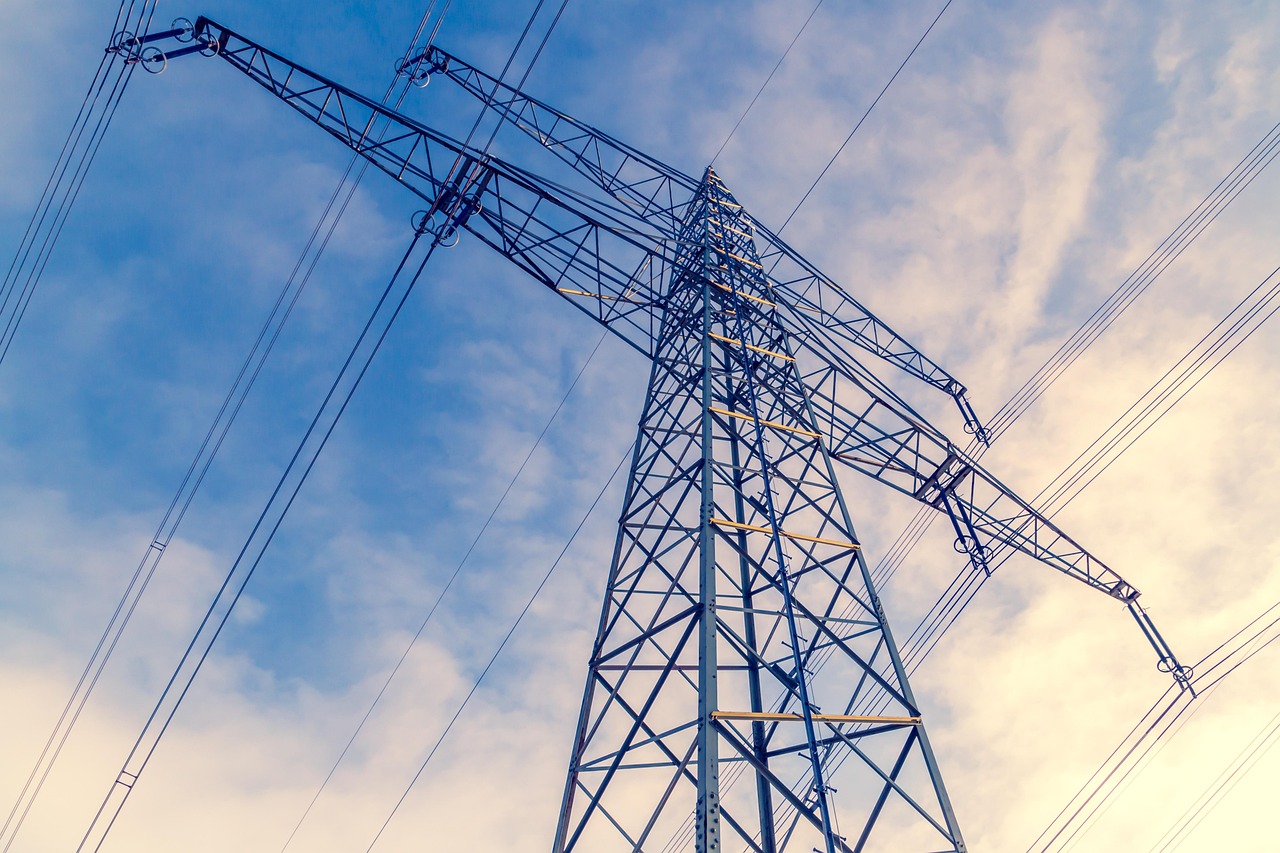


Most of us know how a stock pays us: a dividend now and then, plus whatever the price does. InvIT investing in India works differently. An infrastructure investment trust owns toll roads, power transmission lines and similar assets, collects the cash they throw off, and is required by SEBI to pass most of it on to unitholders. The payout arrives in several pieces, and each piece is treated differently for tax. That split is where many first-time buyers get confused.
This guide covers what an InvIT is, the payout rules in SEBI’s InvIT Regulations, 2014 (as amended up to October 16, 2026), how the interest, dividend and debt-repayment parts of a distribution work, and a worked example with hypothetical numbers so you can see the arithmetic end to end.
In this article
What an InvIT actually is
SEBI’s own investor education deck on InvITs describes them as pooled vehicles, a bit like mutual funds, that own and operate infrastructure such as highways, roads, pipelines, warehouses and power plants. Listed InvITs trade on the exchanges, so you buy and sell units much like shares. There are also unlisted InvITs, which are meant for large institutional investors.
The trust usually doesn’t hold the road or the transmission line directly. It holds special purpose vehicles (SPVs), the companies that own the assets, and it funds them with a mix of equity and loans. That detail sounds dry. It matters later, because the type of money flowing up from the SPV decides the type of money flowing down to you.
The four parties you’ll see in every offer document
- Sponsor: sets up the InvIT, transfers its SPV holdings or assets to it and appoints the trustee, according to the SEBI deck. Its units come with lock-in restrictions.
- Trustee: holds the InvIT’s assets in trust for unitholders and checks that the business follows the regulations.
- Investment manager: sets strategy, decides on buying or selling assets, handles listing and disclosures, and decides on distributions to unitholders.
- Project manager: runs the day-to-day operations and maintenance of the assets.
The SEBI rules that shape an InvIT payout
A few regulations do most of the work in keeping InvIT income steady. Here is what the current regulations say, in plain words.
The 90% distribution rule
Regulation 18(6) says that not less than 90% of the net distributable cash flows (NDCF) of each SPV must be passed up to the InvIT, in proportion to its holding and subject to company or LLP law. It then says not less than 90% of the InvIT’s own NDCF must be distributed to unitholders. Where there is a holding company in between, 100% of the cash it receives from the SPVs goes up to the InvIT, and at least 90% of the cash it generates on its own.
NDCF isn’t accounting profit. It is a cash measure built from operating cash flow with set additions and deductions. SEBI has standardised the format through circulars, most recently an August 14, 2026 circular that lets road InvITs add back major maintenance spending to the extent it was funded by external borrowing, subject to conditions in that circular.
An InvIT doesn’t get to sit on most of its cash. At least 90% of what it can distribute has to reach unitholders, and that one rule is why people buy these units for income.
How often you get paid
For publicly offered InvITs, the regulations say distributions must be declared not less than once every six months in every financial year. Privately placed InvITs only have to declare once a year. The record date falls two working days after the declaration, and payment has to be made within five working days of the record date. That is the floor, not the norm for every trust, so check the offer document and past distribution history of the one you’re looking at.
What the trust is allowed to own
For a public InvIT, at least 80% of the value of its assets has to be in completed, revenue-generating infrastructure projects. Not more than 20% can go into other things such as under-construction projects (capped at 10% of asset value by themselves), and the deck lists infrastructure company debt, listed infra equity, government securities and liquid funds among the other options. This is what makes the cash flow fairly predictable: the trust is mostly collecting tolls or transmission charges on assets that already work.
The borrowing ceiling
Regulation 20 caps consolidated borrowings and deferred payments of the InvIT, holdco and SPVs, net of cash, at 70% of the value of InvIT assets. Once that figure crosses 25%, any further borrowing needs a credit rating and unitholder approval. Above 49%, the InvIT needs a AAA or equivalent issuer rating, among other conditions in the regulation. So leverage is allowed, but it gets harder to add as it rises. If you want a refresher on how rate-sensitive borrowed money can be, our piece on bond duration covers the basics.
Ticket size and trading lot
In an initial or follow-on public offer, the minimum subscription from any investor has to fall between ₹10,000 and ₹15,000. Once listed, a publicly offered InvIT trades in a lot of one unit. Privately placed InvIT units have a trading lot of ₹25 lakh, so those remain an institutional product for all practical purposes.
Where each rupee of the distribution comes from
Here is the part that makes InvIT income different from a stock dividend. The SEBI deck explains that the InvIT invests in SPVs through both equity and debt, and the cash it passes on is split into dividend, interest and return of capital. The ICAI’s CA Journal article on REIT and InvIT taxation adds that income distributed by a business trust keeps the same character in the unitholder’s hands as it had when the trust received it. Interest paid by an SPV to the trust reaches you as interest. Dividend reaches you as dividend.
Every distribution announcement comes with a per-unit breakup, usually interest, dividend, repayment of SPV debt (often labelled capital repayment) and other income. Read that breakup, not just the headline amount.
How each piece was taxed in FY2025-26
The rules below come from IndInvIT’s unitholder tax FAQ for FY2025-26 and the ICAI article. Tax law can change from one year to the next, so treat this as the structure to understand and confirm current treatment with your trust’s latest tax statement or a tax adviser.
- Interest: taxable at your applicable rate. For resident unitholders, the FAQ lists 10% withholding; for non-residents, a concessional 5% plus surcharge and cess.
- Dividend: exempt if the SPV that paid it has not opted for the lower corporate tax regime, with nil withholding for residents. If the SPV has opted for that regime, the dividend is taxable and the FAQ lists 10% withholding for residents.
- Repayment of SPV debt: not taxed when received up to a limit. It reduces your cost of acquisition, so it shows up later as a larger capital gain when you sell. Once the cumulative amount of such distributions goes past the issue price of the unit, the excess is taxed as income from other sources.
- Other income on which the trust itself has paid tax, like interest on its fixed deposits, is exempt in your hands, per the FAQ.
The FAQ spells out that last-but-one calculation as A minus B minus C. A is the cumulative distribution excluding dividend, interest, rental income and amounts taxed in the trust’s hands. B is the issue price of the units. C is any amount already taxed under this rule in earlier years. If the result is negative, the taxable amount is zero.
Two InvITs paying the same ₹3 a unit can leave you with very different post-tax money. The headline payout says nothing until you see how much of it is interest.
A worked example with hypothetical numbers
Let’s take a made-up InvIT, call it Example Roads Trust, issued at ₹100 a unit. You hold 100 units, bought in the IPO for ₹10,000. Assume you are a resident individual and the trust’s SPVs have not opted for the lower tax regime. None of these figures refer to a real trust.
For the half-year, the trust declares ₹3.00 per unit, broken up like this:
| Component | Per unit (₹) | On 100 units (₹) |
|---|---|---|
| Interest | 1.80 | 180 |
| Dividend (from SPV not in lower tax regime) | 0.40 | 40 |
| Repayment of SPV debt | 0.80 | 80 |
| Total | 3.00 | 300 |
Step 1, withholding. On the FY2025-26 rates in the FAQ, the trust deducts 10% on the ₹180 interest, which is ₹18. The dividend has nil withholding and the debt repayment has none. Cash credited to your bank: ₹300 minus ₹18, or ₹282.
Step 2, what is taxable now. The ₹180 interest goes into your income and is taxed at your slab, with the ₹18 TDS as a credit. The ₹40 dividend is exempt in this setup. The ₹80 debt repayment is not taxed yet, because the cumulative repayment of ₹0.80 a unit is far below the ₹100 issue price, so A minus B minus C is negative and the taxable amount is zero.
Step 3, adjust your cost. The ₹0.80 per unit reduces your cost of acquisition from ₹100 to ₹99.20. If the next half-year has the same breakup, your cost drops to ₹98.40 after a full year.
Step 4, the yield you’re really earning. Two such payouts make ₹6.00 a unit for the year, which is 6% of the ₹100 you paid. But only ₹3.60 of that (two lots of ₹1.80) is taxable interest; ₹0.80 is exempt dividend, and ₹1.60 is your own capital coming back. If you had bought the same units on the exchange at ₹120 instead, the same ₹6.00 works out to 5% on your cost, and the capital-repayment part still reduces your ₹120 purchase cost, while the A minus B minus C test still uses the ₹100 issue price.
That last line is the one people skip. A high distribution yield made up mostly of debt repayment is partly your own money coming back, and if the asset behind it is a concession with an end date, it may be worth less each year.
What to check before you buy units
- The distribution breakup over several periods. See how the mix of interest, dividend and repayment has moved. A rising repayment share isn’t wrong, but you should know it’s happening.
- Asset life. Find out from the offer document how long each concession or licence runs, and what happens to cash flows as it nears expiry.
- Leverage against the 70% cap. The closer a trust sits to the ceiling, the less room it has to borrow for new assets.
- Sponsor and related-party deals. The SEBI deck lists unitholder voting rights on related-party matters and on changes to the investment manager. Use them when the notice arrives.
- Price versus issue price. Buying well above the issue price lowers your yield on cost and changes your eventual capital gain.
If you are comparing this with property trusts, our guide to REIT investing in India covers how REIT payouts and rental income work. And since most InvITs reach the market through a public offer, the IPO investing in India guide is a useful read on offer documents and the application process.
The short version
- An InvIT holds infrastructure SPVs and must distribute at least 90% of its net distributable cash flows to unitholders.
- Public InvITs must declare at least once every six months and pay within five working days of the record date.
- At least 80% of a public InvIT’s assets must be completed, revenue-generating projects, and net borrowing is capped at 70% of asset value.
- The payout comes as interest, dividend, debt repayment and other income, and each is taxed differently.
- Debt repayment lowers your cost of acquisition, and only becomes taxable as income once cumulative repayments exceed the issue price.
Disclaimer: This article is for education only and is not investment or tax advice, or a recommendation to buy any InvIT. The worked example uses hypothetical numbers. Regulations and tax rules change, so check the current SEBI regulations, the trust’s offer document and its latest tax statement, and consult a SEBI-registered adviser or tax professional for personal advice.

Leave a Reply
Join the conversation
Commenting is open to registered readers. Sign up with just your email — no password needed, and it takes under a minute.
Sign up to comment Log in