
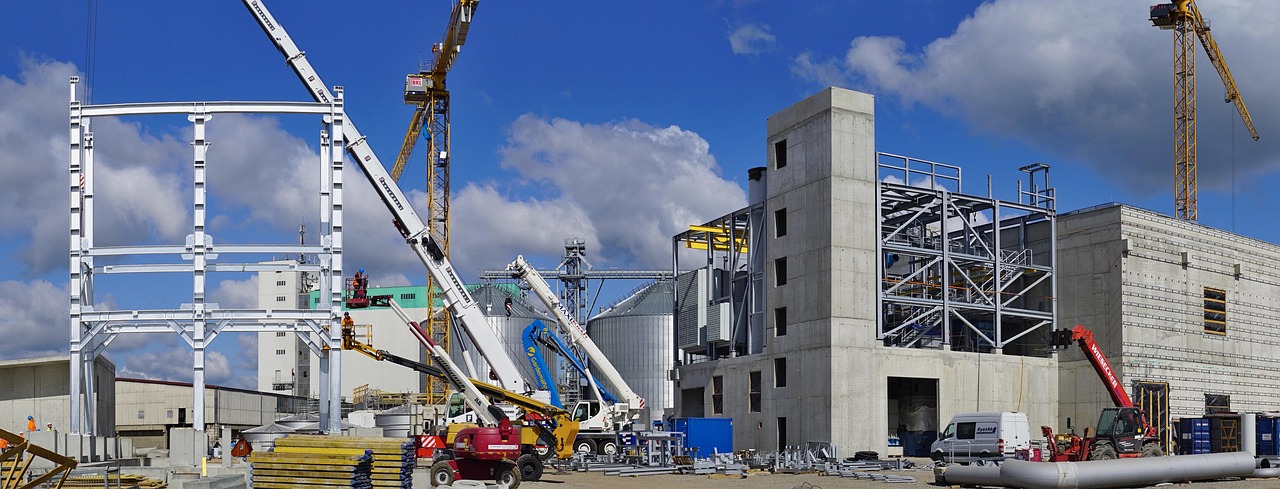



Every company that is building something carries a line on its balance sheet that most investors scroll past: capital work in progress. In plain terms, capital work in progress meaning is simple. It is money already spent on plants, buildings, machinery or lines that are not yet ready to run. The cash has left the company. The asset has not started earning. And until it does, that money sits in limbo, neither depreciated nor producing revenue.
That limbo is exactly why the line deserves a closer look. A growing CWIP number can mean a company is investing for the next leg of growth. It can also mean a project is stuck, over budget or quietly abandoned. Since April 2021, Indian companies have had to tell us which of those it is, through a CWIP ageing schedule. Here is how to read it.
In this article
- Capital Work in Progress Meaning: Where It Sits and Why It Exists
- Interest Can Hide Inside CWIP Too
- The CWIP Ageing Schedule: What Schedule III Now Requires
- A Worked Example: Reading Two CWIP Ageing Tables Side by Side
- Five Questions to Ask When You Read the CWIP Note
- Where CWIP Fits in Quarterly Results
- Common Misreadings to Avoid
- The Short Version
Capital Work in Progress Meaning: Where It Sits and Why It Exists
Under Indian accounting rules, an asset becomes property, plant and equipment (PPE) only when it is ready. Paragraph 55 of Ind AS 16 says depreciation of an asset begins when it is available for use, that is, when it is in the location and condition needed to operate the way management intends. Before that point, the spending is parked under capital work in progress, shown separately among non-current assets.
Think of a cement company building a new kiln. Land is levelled, civil work is poured, equipment is bought and installed, and engineers are paid. All of that piles up in CWIP. The day the kiln is commissioned and ready to produce, the balance moves out of CWIP into PPE, and depreciation starts hitting the profit and loss statement.
Two things follow from this, and both matter for anyone reading results:
- CWIP carries no depreciation. So a company with a large CWIP pile looks better on reported profit than it will once those assets are capitalised and start depreciating.
- CWIP earns nothing yet. Return ratios like return on capital employed get dragged down while the money is tied up, and then (ideally) recover once the asset starts producing.
If you are new to the balance sheet itself, our beginner’s checklist for reading a company balance sheet walks through where CWIP sits relative to fixed assets, investments and working capital.
Interest Can Hide Inside CWIP Too
Here is the bit many retail investors miss. When a company borrows to build a long-gestation asset, the interest on that borrowing does not always go through the P&L. Ind AS 23 on borrowing costs allows interest to be capitalised into the cost of a qualifying asset while it is being built. In other words, some interest ends up inside CWIP rather than in the finance cost line.
The standard also puts limits on this. Paragraph 20 says capitalisation of borrowing costs must be suspended during extended periods in which active development is suspended. Paragraph 22 says capitalisation must stop when substantially all the activities needed to get the asset ready are complete. So a project that has been sitting idle for years should not, in principle, keep soaking up interest. Whether that is being followed is something the auditor and the notes to accounts can help you judge.
CWIP is spending that has not yet become earning. The longer it stays there, the harder you should ask why.
The CWIP Ageing Schedule: What Schedule III Now Requires
On 24 March 2021, the Ministry of Corporate Affairs amended Schedule III of the Companies Act, 2013, with effect from 1 April 2021. Schedule III is the format every company’s financial statements follow. The amendment added a CWIP disclosure in Division I (companies following the older Indian GAAP), Division II (Ind AS companies) and Division III (NBFCs on Ind AS).
The notification asks for two tables.
Table 1: How old is the CWIP?
Companies must split CWIP by how long the amount has been sitting there, in four buckets:
- Less than 1 year
- 1 to 2 years
- 2 to 3 years
- More than 3 years
Each bucket is shown separately for projects in progress and projects temporarily suspended. The notification also says the total of this table must tally with the CWIP figure in the balance sheet. That last line is useful: if you are checking a company’s notes, the ageing total should match the face of the balance sheet exactly.
Table 2: When will the delayed projects finish?
For any CWIP whose completion is overdue, or whose cost has exceeded the original plan, companies must give a completion schedule, project by project, showing whether each is expected to be completed in less than 1 year, 1 to 2 years, 2 to 3 years, or more than 3 years. Details of projects where activity has been suspended have to be given separately.
This second table is where the real information lives. A company does not have to name every project in the first table, but in the second it has to list the problem ones. The same notification applies a near-identical ageing format to intangible assets under development, which is the equivalent line for software, product development and similar assets still being built.
A Worked Example: Reading Two CWIP Ageing Tables Side by Side
Let us take two made-up companies, both with CWIP of ₹1,000 crore at year end. The figures below are purely illustrative, built to show how the reading works, and are not from any real company.
| CWIP bucket (₹ crore) | Company A | Company B |
|---|---|---|
| Less than 1 year | 700 | 150 |
| 1 to 2 years | 250 | 150 |
| 2 to 3 years | 50 | 200 |
| More than 3 years | 0 | 500 |
| Total | 1,000 | 1,000 |
| Of which temporarily suspended | 0 | 350 |
Same headline number. Very different stories.
Company A has 70% of its CWIP (₹700 crore out of ₹1,000 crore) under a year old, and nothing older than three years. That pattern fits a company in the middle of a fresh capex cycle. Money is going in, and most of it is recent. The questions here are about execution: when will the new capacity come on stream, and what will it add to revenue?
Company B has half its CWIP (₹500 crore out of ₹1,000 crore) older than three years, and ₹350 crore sits in projects that are temporarily suspended. That is not a capex cycle. That is a backlog. Now you want to see the second table. Which projects are overdue? Has the expected completion date been pushed out year after year? Is any interest still being capitalised on the stalled ones?
Now picture what happens when Company B’s stuck projects are finally either commissioned or written off.
- If commissioned, ₹500 crore moves into PPE and starts depreciating. Suppose (again, illustrative) it is depreciated over 20 years on a straight-line basis with no residual value. That is ₹25 crore of new depreciation every year (₹500 crore divided by 20), which reduces reported profit before tax.
- If the company concludes the project will not work, there may be an impairment charge, which hits profit in one go.
Either way, the cost was always there. CWIP simply delayed when the P&L would feel it.
Two companies can report the same CWIP total and be in completely different places. The ageing buckets, not the total, tell you which is building and which is stuck.
Five Questions to Ask When You Read the CWIP Note
We find it helps to go through the same short list every time a company’s annual report lands.
- What share of CWIP is older than three years? A small slice can be normal for very long projects like ports, power plants or large real estate. A growing slice, year after year, is a warning.
- How much is “temporarily suspended”? The word “temporarily” is the company’s own description. Compare it with last year’s note. If the same project has been temporarily suspended for three annual reports in a row, take that label with a pinch of salt.
- Do the completion dates keep slipping? Line up the completion schedule from the last two or three annual reports. A project that was due “in less than 1 year” two years ago and is still in that bucket today tells you a lot about management’s forecasting.
- How does CWIP compare with gross block? If CWIP is large relative to the existing asset base, a big jump in depreciation is coming once projects are capitalised. Factor that into any earnings estimate.
- What does the auditor say? Auditors sometimes flag the carrying value of long-pending CWIP, or the capitalisation of interest on it, as a key audit matter. That section of the audit report, explained in our piece on key audit matters, is worth a read before the financial statements themselves.
Cash flow is a good cross-check too. Capex shows up as purchase of property, plant and equipment in the investing section of the cash flow statement. If a company keeps reporting heavy capex while revenue and PPE stay flat, the money is probably sitting in CWIP, and the ageing table will show for how long.
Where CWIP Fits in Quarterly Results
Quarterly results filed with the exchanges carry far less detail than an annual report. The detailed ageing schedule is part of the annual financial statements, so the full picture arrives once a year. That said, management commentary in results presentations often mentions commissioning timelines for new capacity. Treat those statements as a promise you can check against next year’s ageing table.
If you want to fit CWIP into a wider routine for reading results, our guide on how to analyse quarterly results of a company covers revenue, margins and balance sheet items in order. And because stalled projects can sometimes turn into disputes with contractors or lenders, the note on contingent liabilities is worth reading right after the CWIP note.
Common Misreadings to Avoid
“High CWIP is bad.” Not by itself. A company investing ahead of demand will carry high CWIP for a while. What matters is age and progress, not size.
“CWIP will become revenue soon.” Only if the project is actually completed and the capacity is used. Old suspended projects may never contribute anything.
“Profit is clean because depreciation is low.” Low depreciation can simply mean the big assets have not yet been capitalised. Once they are, the depreciation line will rise even if nothing else changes.
“Interest cost is low, so debt is not a problem.” Some of the interest may be capitalised into CWIP under Ind AS 23. Look at total borrowing and the borrowing cost note, not just the finance cost line in the P&L.
The Short Version
Capital work in progress is money spent on assets that are not ready yet. It sits outside depreciation and outside revenue, which makes it easy to overlook and easy to misread. The Schedule III ageing table, in force since April 2021, gives you the tools to separate a healthy build-out from a stuck one: check how much is older than three years, how much is suspended, and whether completion dates keep moving. Read it alongside the cash flow statement and the audit report, and the CWIP line stops being a blind spot.
Disclaimer: This article is for education only and is not investment advice. The company figures in the worked example are illustrative and do not refer to any real company. Please do your own research or consult a SEBI-registered adviser before making investment decisions.

Leave a Reply
Join the conversation
Commenting is open to registered readers. Sign up with just your email — no password needed, and it takes under a minute.
Sign up to comment Log in