



Open any stock quote page on an Indian broking app and you’ll see a small line that says FV, sometimes ₹1, sometimes ₹2 or ₹10. That’s the face value of share, and new investors tend to either ignore it completely or read far too much into it. Both are mistakes. Face value tells you almost nothing about what a stock is worth, but it quietly decides how dividends get announced, what a stock split actually does and how share capital shows up in the balance sheet.
We’ll go through what the number means, where it matters, where it doesn’t, and work through a few examples with round, made-up figures so the arithmetic is easy to follow. Any company called Company A or Company B below is hypothetical.
In this article
What is the face value of share, really?
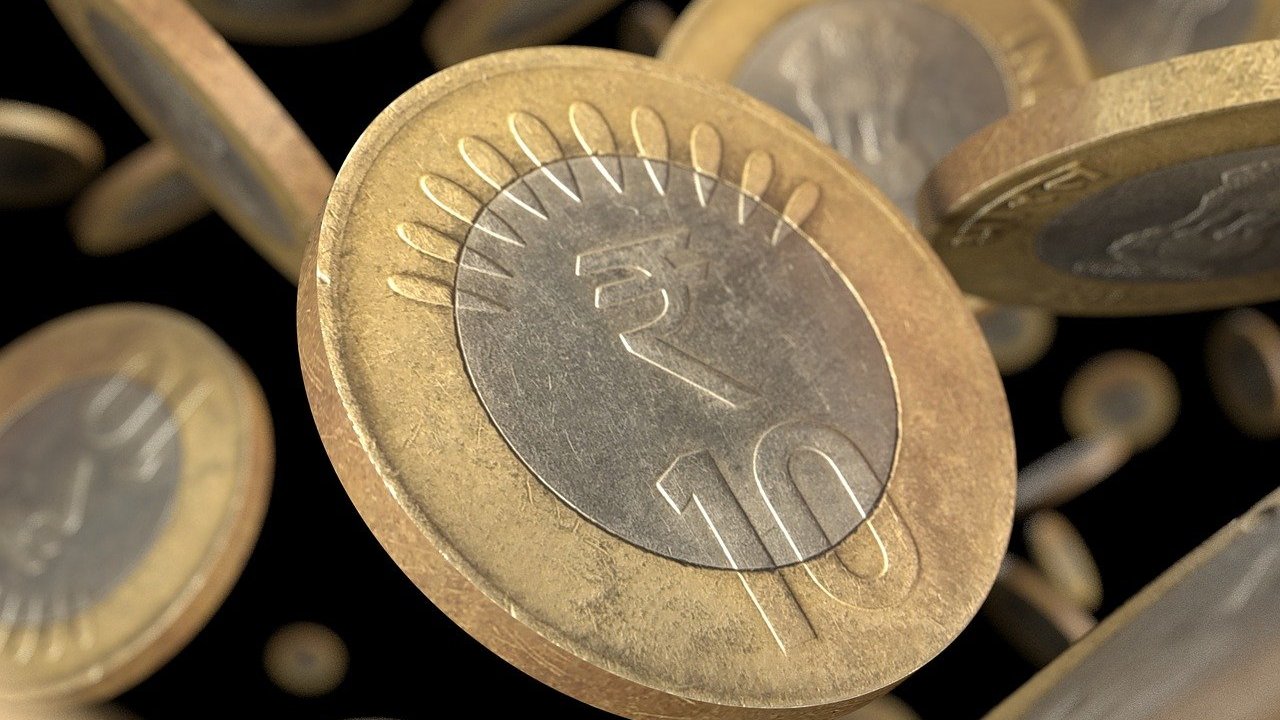
Investopedia defines face value as the nominal value of a security as stated by its issuer. For a bond it’s the amount repaid at maturity, which is a number that genuinely matters. For a share it’s the value written in the company’s charter and on the old paper certificate. Think of it as the share’s legal denomination, much like the ₹10 stamped on a coin.
Here’s the bit that surprises people. That denomination has little to do with the market price. Investopedia points out that a stock’s face value is typically very low and unrelated to its market value, and gives two American examples: AT&T’s par value is listed at $1 a share and Apple’s at $0.00001. Nobody buys Apple because of that number, and nobody should buy or skip an Indian stock because its FV is ₹1 rather than ₹10.
On Indian quote screens you’ll see face values such as ₹1, ₹2, ₹5 and ₹10. The figure isn’t fixed for life, either. A company can change it later through a split or a consolidation, which we’ll get to below.
Face value vs market value vs book value
Three “values” get mixed up all the time, so let’s pin them down before going further.
- Face value is the fixed nominal amount per share in the company’s records. It changes only through a corporate action such as a split or consolidation.
- Market value is whatever the share trades at on NSE or BSE right now. It moves every second the market is open.
- Book value is the company’s assets minus liabilities, divided by the number of shares. It moves when the balance sheet changes, usually once a quarter.
A share with a face value of ₹2 can trade at ₹2,000 or at ₹20. The gap between the two tells you about investor expectations, profits and growth. It tells you nothing about the face value itself.
Face value is the share’s legal denomination, not a price tag. A ₹1 share is not “cheaper” than a ₹10 share in any sense that matters to your returns.
Where face value actually matters
1. Dividend percentages are worked out on face value
This is the place most retail investors bump into face value, often without realising it. Indian companies frequently announce a dividend as a percentage, and that percentage is on face value, not on the share price. Zerodha Varsity explains that dividends are paid per share and are also expressed as a percentage of face value. Its own example: an Infosys dividend of ₹42 a share on a face value of ₹5, which works out to 840% (42 ÷ 5).
Headlines love those big percentages. 840% sounds enormous. It isn’t, at least not in the way it sounds. Let’s work it through with two hypothetical companies.
Worked example:
- Company A has a face value of ₹1 and declares a 500% dividend. That’s 500% of ₹1, so ₹5 per share.
- Company B has a face value of ₹10 and declares a 50% dividend. That’s 50% of ₹10, also ₹5 per share.
Same cash in your bank account per share. One headline says 500%, the other says 50%. If both shares trade at ₹1,250, each gives you a dividend yield of ₹5 ÷ ₹1,250, or 0.4% of the price you’d pay today. That yield is the number that tells you what you’re earning on your money. We’ve covered how to calculate it, and why a high yield can mislead, in our guide to dividend yield.
So when you read “board recommends 300% dividend”, do the quick sum: percentage × face value = rupees per share. Then compare those rupees with the share price.
2. Stock splits change the face value, bonus issues don’t
This is the second place face value earns its keep, and it’s the cleanest way to tell a split and a bonus apart. Zerodha Varsity puts it plainly: in a bonus issue the face value stays the same, while in a stock split the face value changes.
Under Section 61 of the Companies Act, 2013, a company can, if its articles allow and shareholders approve in a general meeting, sub-divide its shares into shares of a smaller amount than the memorandum fixes. That’s a split. The same section also lets a company consolidate shares into a larger amount, which is a reverse split. The proviso adds that a consolidation changing shareholders’ voting percentages needs Tribunal approval.
Worked example of a split. Varsity’s own numbers work well here. Say you hold 100 shares with a face value of ₹10, trading at ₹900. Your holding is worth ₹90,000.
- After a 1:2 split, face value becomes ₹5. You hold 200 shares, the price adjusts to ₹450, and the holding is still ₹90,000.
- After a 1:5 split, face value becomes ₹2. You hold 500 shares at ₹180. Still ₹90,000.
Nothing about the business changed. The cake got cut into more slices, and each slice carries a smaller denomination.
Worked example of a bonus. Again from Varsity: with a 1:1 bonus, 100 shares at ₹75 (₹7,500) become 200 shares at ₹37.50. The total stays ₹7,500, but the face value per share does not move. If it was ₹10 before, it’s ₹10 after. What changes is that the company moves money from its reserves into share capital to back the new shares. Section 63 of the Companies Act lists where that money can come from: free reserves, the securities premium account or the capital redemption reserve. Revaluation reserves can’t be used, and a bonus can’t be issued in lieu of a dividend.
If you want to go deeper on the mechanics, we’ve written separately on the bonus issue of shares and you can apply the same logic in reverse to share consolidation.
3. Share capital on the balance sheet
Pick up any annual report and look for “equity share capital”. That line is simply the number of shares multiplied by the face value. It is usually tiny compared with the company’s market value, and that’s normal.
Worked example. Company A has 50 crore shares with a face value of ₹2. Its equity share capital is 50 crore × ₹2 = ₹100 crore. If the stock trades at ₹1,500, the market value is ₹75,000 crore. The ₹100 crore figure doesn’t tell you much about valuation on its own.
Now suppose Company A once sold shares to the public at ₹300 each. Only ₹2 per share sits in share capital. Investopedia describes how, for shares with a par value, the amount received above par is recorded separately from the stated capital. In India, Section 52 of the Companies Act requires the premium received on shares issued above face value to be transferred to a “securities premium account”, the same account Section 63 lets a company draw on for bonus shares. So the ₹298 per share above face value shows up as securities premium, not share capital.
4. Shares can’t be issued below face value
Section 53 of the Companies Act, 2013 says that, except as provided in Section 54 (sweat equity), a company shall not issue shares at a discount, and any share issued at a discounted price is void. “Discount” here means below face value. There is one carve-out. A company may issue shares at a discount to its creditors when debt is converted into shares under a statutory resolution plan or a debt restructuring scheme that follows RBI guidelines.
That’s why face value works as a floor for fresh issues. An IPO can be priced at ₹500 on a ₹10 face value, and that ₹490 premium is perfectly normal. It just can’t be priced at ₹8 on a ₹10 face value. If you’re getting into primary markets, our guide to IPO investing in India covers how price bands and allotment work.
The quick sum to remember: dividend percentage × face value = rupees per share. Do that before getting excited about a three-digit dividend headline.
Where face value doesn’t matter (but people think it does)
It doesn’t make a stock cheap or expensive. A ₹1 face value share at ₹3,000 isn’t “overpriced” relative to a ₹10 face value share at ₹300. You’d compare them on earnings, cash flows and growth, using ratios like P/E, not on face value.
It doesn’t predict returns. There’s no rule that low face value stocks do better or worse. Face value is set by the company’s legal structure and its history of splits.
A split doesn’t make you richer. Your holding value is unchanged on the ex-date. What a split can change is liquidity. Smaller per-share prices make it easier for small investors to buy a round number of shares, which is a point Varsity makes about both splits and bonus issues.
EPS falls after a split, and that’s fine. Earnings per share is net profit divided by the number of shares. If Company A earns ₹500 crore on 50 crore shares, EPS is ₹10. After a 1:5 split it has 250 crore shares, so EPS becomes ₹2. Profit didn’t shrink. The denominator grew. When you compare EPS across years, check whether a split or bonus happened in between, because older figures need to be adjusted for the new share count.
A quick checklist when you see face value on a quote screen
- Note the FV. You’ll need it to convert any dividend percentage into rupees.
- If a dividend is announced as a percentage, multiply by FV to get rupees per share, then divide by the share price to get the yield.
- If the FV has changed recently, a split or consolidation has happened. Adjust any older EPS or price history for it.
- If the share count went up but FV didn’t change, that’s a bonus issue.
- Don’t treat a low FV as a sign of a cheap stock, or a high FV as a sign of quality.
Face value is one of those numbers that’s easy to skip, and most days you can. Just don’t skip it on the days a company announces a dividend, a split or a bonus. That’s when the ₹1, ₹2 or ₹10 printed on your quote screen starts doing real work.
Disclaimer: This article is for educational purposes only and is not investment advice. Company A and Company B and their figures are hypothetical examples. Investing in stocks involves risk of loss. Please do your own research or consult a SEBI-registered investment adviser before making any investment decision.

Leave a Reply
Join the conversation
Commenting is open to registered readers. Sign up with just your email — no password needed, and it takes under a minute.
Sign up to comment Log in