
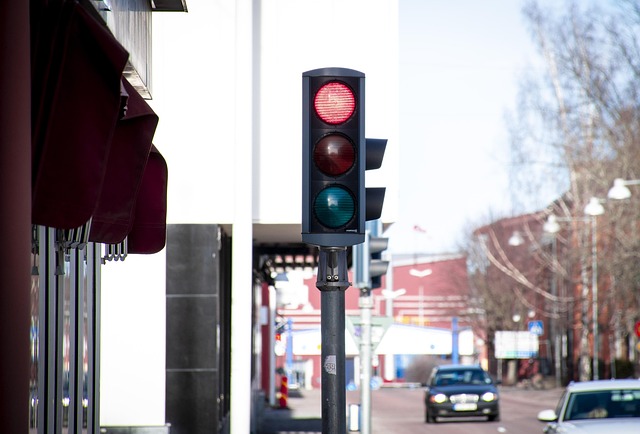



Most traders in India have seen a stock freeze at its upper or lower circuit. Far fewer have watched the whole exchange stop. That’s what a market-wide circuit breaker on NSE does: when the Nifty 50 or the Sensex moves 10%, 15% or 20% from the previous close, trading pauses across every equity and equity derivative market in the country, all at once. It’s rare. The best-known recent case came in March 2020, and Mint reported at the time that it was the first such halt in 12 years. But because it’s rare, very few people know the exact rules, and the rules matter a lot on the one day you need them.
This guide lays out the trigger levels, how long each halt lasts, how trading restarts, and what it means for an open position. The rules come from NSE’s circuit breaker page. The timing examples further down are hypothetical scenarios we built to show how the table works. They aren’t forecasts.
In this article
- What a market-wide circuit breaker on NSE is
- The 10%, 15% and 20% trigger table
- How the trigger levels are calculated each day
- How trading restarts: the pre-open call auction
- Worked examples: reading the clock on a bad day
- What actually happened in March 2020
- Market-wide breaker vs a stock’s own price band
- What a halt means for your positions
- Why the system is built this way
- The short version
What a market-wide circuit breaker on NSE is
A circuit breaker is a forced pause. The idea is simple enough: when prices are falling (or rising) so fast that nobody can think straight, stop the clock, let people absorb the news, check margins, and come back to a fresh auction instead of a panic spiral.
India has had this system for a long time. NSE says it put index-based market-wide circuit breakers in place with effect from July 02, 2001, under SEBI Circular No. SMDRPD/Policy/Cir-37/2001 dated June 28, 2001. SEBI then partially modified the rules through Circular No. CIR/MRD/DP/25/2013 dated September 03, 2013, and the version in force today is the revised one.
Three points from NSE’s description are worth getting clear before anything else:
- It works in both directions. The 10%, 15% and 20% levels apply “either way”, so a sharp rally can halt trading just as a crash can.
- It’s coordinated. A trigger brings a trading halt in all equity and equity derivative markets nationwide. Cash, futures and options all stop together.
- Either index can pull the trigger. The breaker fires on a move in the BSE Sensex or the Nifty 50, whichever crosses its limit first.
That last point isn’t trivia. The two indices don’t move in perfect lockstep, so one can hit 10% while the other is still a little short of it. The exchange doesn’t wait for both.
The 10%, 15% and 20% trigger table
How long the market stays shut depends on two things: how big the move is, and what time of day it happens. Here’s the table as NSE publishes it.
| Trigger limit | When it is hit | Market halt | Pre-open call auction after the halt |
|---|---|---|---|
| 10% | Before 1:00 pm | 45 minutes | 15 minutes |
| 10% | At or after 1:00 pm, up to 2:30 pm | 15 minutes | 15 minutes |
| 10% | At or after 2:30 pm | No halt | Not applicable |
| 15% | Before 1:00 pm | 1 hour 45 minutes | 15 minutes |
| 15% | At or after 1:00 pm, before 2:00 pm | 45 minutes | 15 minutes |
| 15% | On or after 2:00 pm | Remainder of the day | Not applicable |
| 20% | Any time during market hours | Remainder of the day | Not applicable |
Read the table a couple of times and a pattern shows up. Early in the day, the system gives the market a long cooling-off period because there’s plenty of session left for a disorderly move to snowball. Late in the day, a 10% move doesn’t stop anything at all, while a 15% move after 2 pm ends the session outright. And 20% is the hard stop: whatever the time, the day is over.
A 10% move at 2:45 pm doesn’t stop trading at all. The same 10% move at 10:30 am shuts the whole market for 45 minutes. Time of day matters as much as the size of the fall.
How the trigger levels are calculated each day
The percentages are fixed. The index points they translate to are not. NSE says it computes the 10%, 15% and 20% limits every day from the previous day’s closing level of the index, rounded off to the nearest tick size. That daily reset is one of the things the 2013 SEBI circular changed.
NSE also publishes the actual numbers. On its circuit breaker page, it shows the Nifty 50 closing level as on 16-Oct-2026 at 23,146.15, and these trigger limits for 19-Oct-2026:
- 10%: 2,314.60 points either way
- 15%: 3,471.90 points either way
- 20%: 4,629.25 points either way
Turn those into index levels and you get the lines that matter for Monday, October 19. We did the arithmetic ourselves by adding and subtracting NSE’s point values from the 23,146.15 close:
| Stage | Downside trigger (Nifty 50) | Upside trigger (Nifty 50) |
|---|---|---|
| 10% | 20,831.55 | 25,460.75 |
| 15% | 19,674.25 | 26,618.05 |
| 20% | 18,516.90 | 27,775.40 |
One detail people get wrong: the 15% and 20% levels are measured from the previous close too, not from wherever the market reopened after the first halt. So if the Nifty hits the 10% level, pauses and reopens, the next stop isn’t another 15% lower. It’s the 19,674.25 line, which in this case is only about 1,157 points below the 10% trigger.
How trading restarts: the pre-open call auction
When a halt ends, the market doesn’t simply flip back to normal order matching. NSE says the market re-opens after a breach with a pre-open call auction session, and the table above shows that session lasts 15 minutes after each halt (except when trading is shut for the rest of the day, in which case there’s nothing to reopen).
If you’ve placed orders between 9:00 and 9:15 am on a normal morning, you already know the mechanism. Orders are collected for a few minutes, the exchange works out a single price at which the most shares can change hands, and continuous trading starts from there. We’ve explained that process step by step in our guide to the NSE pre-open session. After a circuit breaker, the same idea is used to find a fair restarting price rather than letting the first few panicky orders set it.
So in practice, a “45-minute halt” means about an hour before regular trading is back: 45 minutes of nothing, then 15 minutes of order collection and price discovery.
Worked examples: reading the clock on a bad day
These scenarios are made up. They use NSE’s table to show how much time you’d actually lose in different situations.
Scenario 1: an early 10% fall. Say the Nifty touches its 10% lower trigger at 10:30 am. That’s before 1 pm, so the halt runs 45 minutes, until 11:15 am. The pre-open call auction runs from 11:15 to 11:30 am, and continuous trading resumes at 11:30. You’ve lost an hour of normal trading.
Scenario 2: a 10% fall after lunch. Now say the trigger is hit at 1:40 pm. That falls in the “at or after 1:00 pm up to 2:30 pm” band, so the halt is only 15 minutes, until 1:55 pm, followed by a 15-minute pre-open to 2:10 pm.
Scenario 3: the boundary case. If the trigger is hit at exactly 1:00 pm, it counts as “at or after 1:00 pm”. The shorter 15-minute halt applies, not the 45-minute one. Edges like this are why it pays to read the wording and not just the gist.
Scenario 4: a late 10% move. A 10% fall at 2:40 pm doesn’t halt anything. Trading carries on. But keep going: if the slide continues and reaches 15% after 2 pm, trading is shut for the remainder of the day. So a late 10% day has no pause to slow it down, and the next stop is the end of the session.
Scenario 5: 15% before lunch. Suppose a shock hits and the Nifty is 15% down by noon. The halt is 1 hour 45 minutes, until 1:45 pm, then the pre-open session runs to 2:00 pm. If it then falls further and reaches 20%, that’s it for the day, whatever the time.
What actually happened in March 2020
The clearest recent example came on March 13, 2020, as COVID-19 fears hit global markets. According to Mint’s report from that morning, trading was halted for 45 minutes after the Nifty 50 crashed in early trade. The Nifty was down 10.07% at 8,624 when trading stopped, while the Sensex was down 9.4% at 29,687. Mint noted it was the first time in 12 years that trading in Indian markets had to be halted.
Look at those two numbers together. The Sensex hadn’t reached 10% when the halt hit. It didn’t need to, because the Nifty got there first, and the rule is whichever index breaches its limit earlier. Anyone watching only the Sensex that morning would have been caught off guard.
The 10.07% figure is also a useful reminder that the index can overshoot the exact trigger slightly before the halt takes hold. A breaker isn’t a wall at precisely 10.00%. It’s a switch that flips once the line is crossed.
Market-wide breaker vs a stock’s own price band
This is where beginners often mix things up. Individual stocks have their own price bands, commonly called circuit limits, which cap how far that one stock can move in a day. When a small cap hits its upper circuit, only that stock is affected. Everything else keeps trading. We’ve covered how those bands work, and how to read the daily list of stocks stuck at them, in our explainer on the price band and circuit limit on NSE.
The market-wide breaker is a different animal:
- It’s triggered by an index, the Nifty 50 or the Sensex, not by a single stock.
- It stops trading everywhere, including in equity derivatives, not just in one counter.
- It has a time-based halt and a structured restart through a pre-open auction.
A stock band is a speed limit on one road. The index breaker closes the whole highway for a while.
A stock at its lower circuit can’t fall further today. An index breaker means nothing at all can trade, including the futures and options you might use to hedge.
What a halt means for your positions
The practical risk isn’t the halt itself. It’s that you can’t act while it lasts. Because the halt covers equity derivatives as well as cash, you can’t buy a put to protect a portfolio, close a short futures position or roll an option during that window. Whatever you held when the clock stopped, you’re still holding when it restarts.
A few habits help:
- Know your exposure before the open. If you’re running leveraged positions, work out what a 10% index move does to your margin. On a breaker day you may get very little time to fix a shortfall once trading resumes.
- Don’t assume the reopen price will be near the halt price. The pre-open auction finds a new price after 45 minutes or more of news flow. It can be much better or much worse than where things stopped.
- Check with your broker how they handle open orders around a halt. Practices and app behaviour differ, and the time to find out is a quiet day, not a crash.
- Keep position sizes sane. A breaker day is exactly the kind of tail event that position sizing is meant to survive. Our risk management in trading guide covers how to size trades so one bad session doesn’t sink the account.
Why the system is built this way
You could argue a halt just delays the inevitable. Sometimes it does. On March 13, 2020, though, Mint reported that the Nifty and Sensex recovered after trading resumed, which is the kind of outcome the design hopes for: give people time to separate panic from information.
The tiered timing also makes sense once you think about it. A huge move at 10 am leaves most of the session for things to get worse, so a long pause is justified. A huge move at 2:45 pm leaves little room either way, and an extra halt could stop anyone from closing positions before the day ends. And a 20% move in a broad index is extreme enough that ending the session is the only sensible response.
The short version
NSE’s market-wide circuit breaker halts all equity and equity derivative trading in India when the Nifty 50 or the Sensex, whichever gets there first, moves 10%, 15% or 20% from the previous day’s close. How long the halt lasts depends on the size of the move and the time it happens, from no halt at all for a 10% move after 2:30 pm to the rest of the day for any 20% move. Trading restarts through a 15-minute pre-open call auction. The point levels reset every day, and NSE publishes them in advance, so it’s worth knowing where the lines are before a volatile session, not during one.
Disclaimer: This article is for information and education only and is not investment advice or a recommendation to buy or sell any security or derivative. The trigger rules and the October 19, 2026 limits are from NSE’s circuit breaker page linked above, and the March 2020 figures are from the Mint report linked above. The index levels in the second table are our own arithmetic from NSE’s figures, and all timing scenarios are hypothetical. Trading carries risk; consult a SEBI-registered investment adviser before making investment decisions.

Leave a Reply
Join the conversation
Commenting is open to registered readers. Sign up with just your email — no password needed, and it takes under a minute.
Sign up to comment Log in